

Patents
Patents I'm Listed As An Inventor On
Each record below is a reference to a patents issued by the U.S. Patent and Trademark Office.
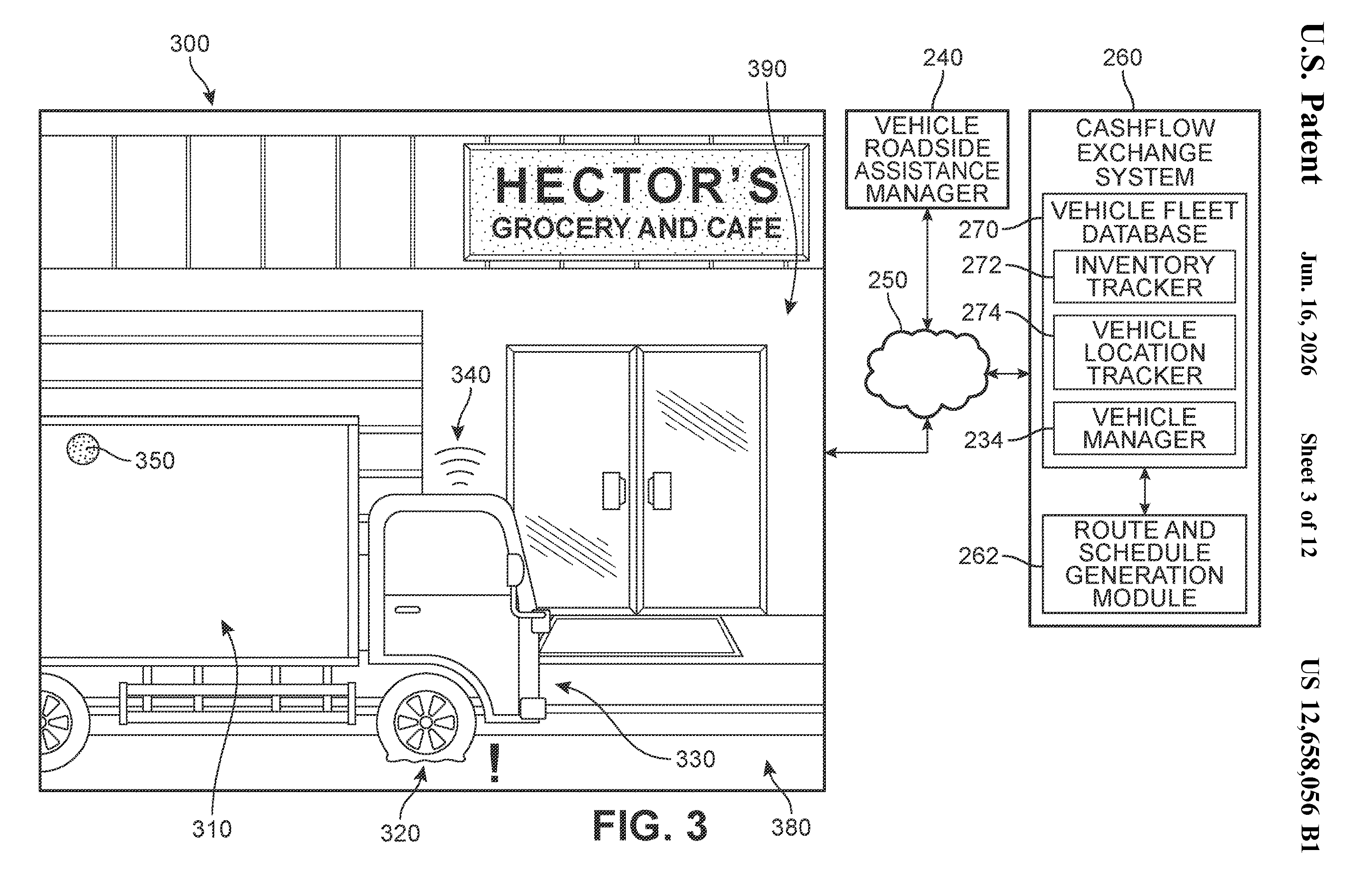
System and method for autonomous vehicle assistance
 View patent document
A roadside assistance management system for autonomous vehicles (AVs) is disclosed. The roadside assistance management system monitors and manages a plurality of AVs which are used in the transport of various items such as cash from one location to another. Each AV can request specific types of assistance. Upon receiving such a request, the roadside assistance management system can dispatch one or more additional AVs to the render assistance to the requesting AV.
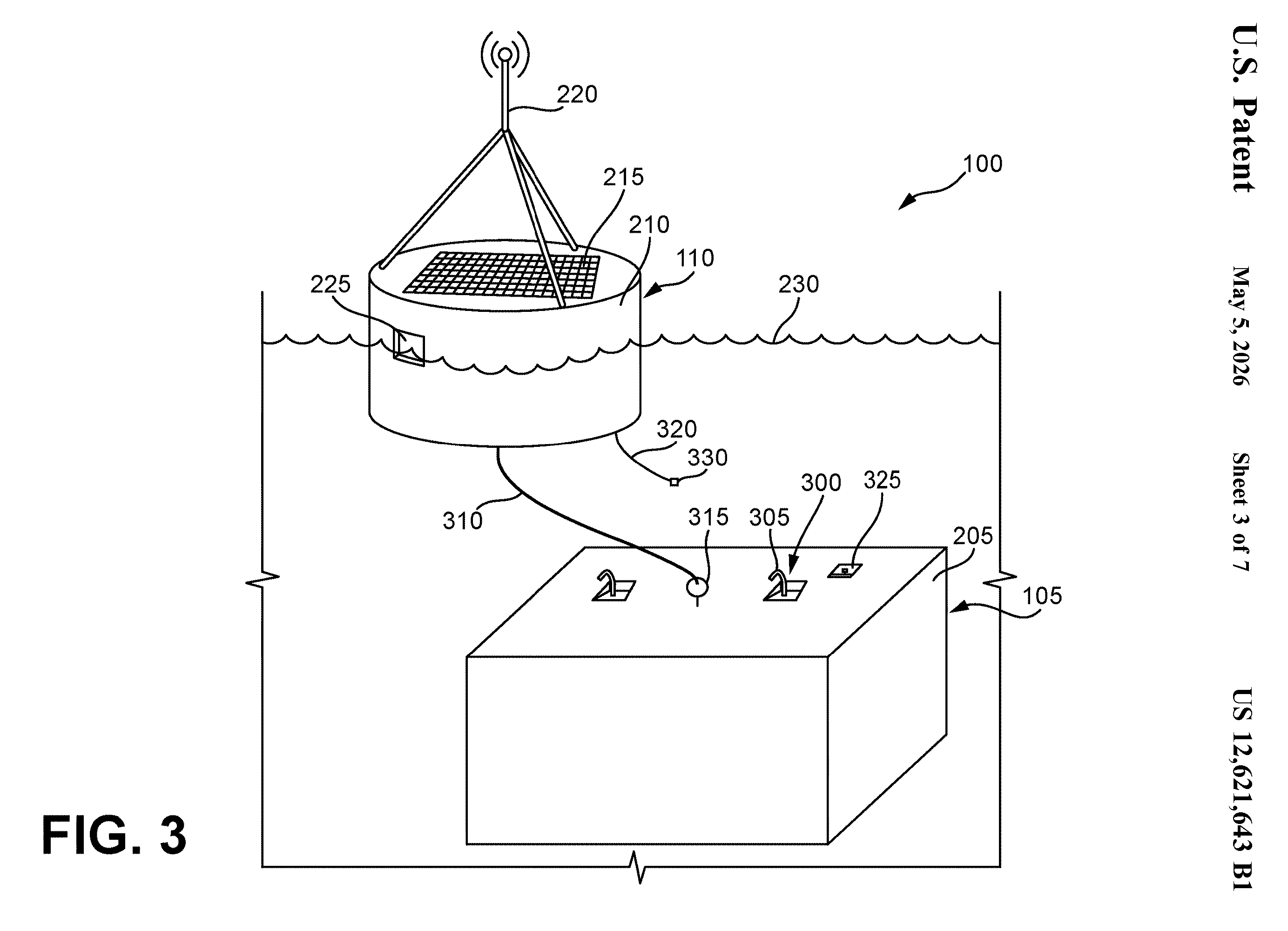
Communications system for disaster conditions
 View patent document
A communications system including a first unit having a first body configured to be securely fixed with respect to the ground; and a second unit having a second body configured to be removably physically attached against the first body of the first unit. The first unit is configured to be in electrical communication with the second unit when the second body of the second unit is physically attached against the first body of the first unit; and the second body of the second unit is configured to physically detach from the first body of the first unit when a surrounding water level reaches a predetermined elevation and float in the surrounding water proximate to the first unit.
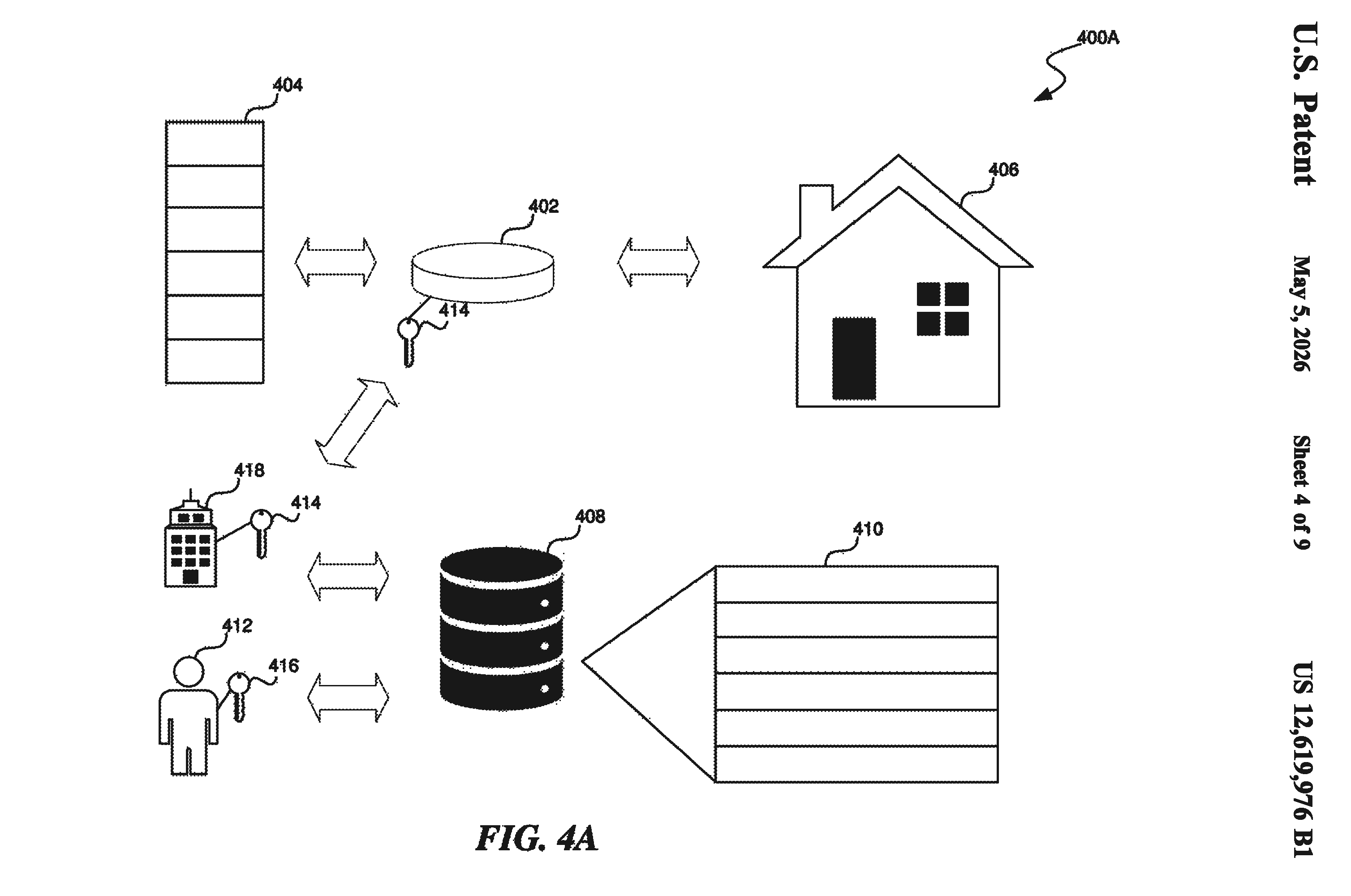
Private vault managed using a non-fungible token
 View patent document
Aspects of the present disclosure are directed to managing a metadata vault with a non-fungible token. Implementations can mint a non-fungible token (NFT) that corresponds to a tangible person or thing. A metadata vault can store metadata about the person or thing, and the NFT can secure access to the metadata vault. For example, the NFT can include a credential (e.g., public key) that comprises access permission for the private vault. In some implementations, a private key that corresponds to the public key can be provide a user, such as an authenticated user, additional access to the private vault. For example, the public key can provide a first level of access to the private vault (e.g., either read access or write access) and the private key can provide a second level of access to the private vault (e.g., both read access or write access).
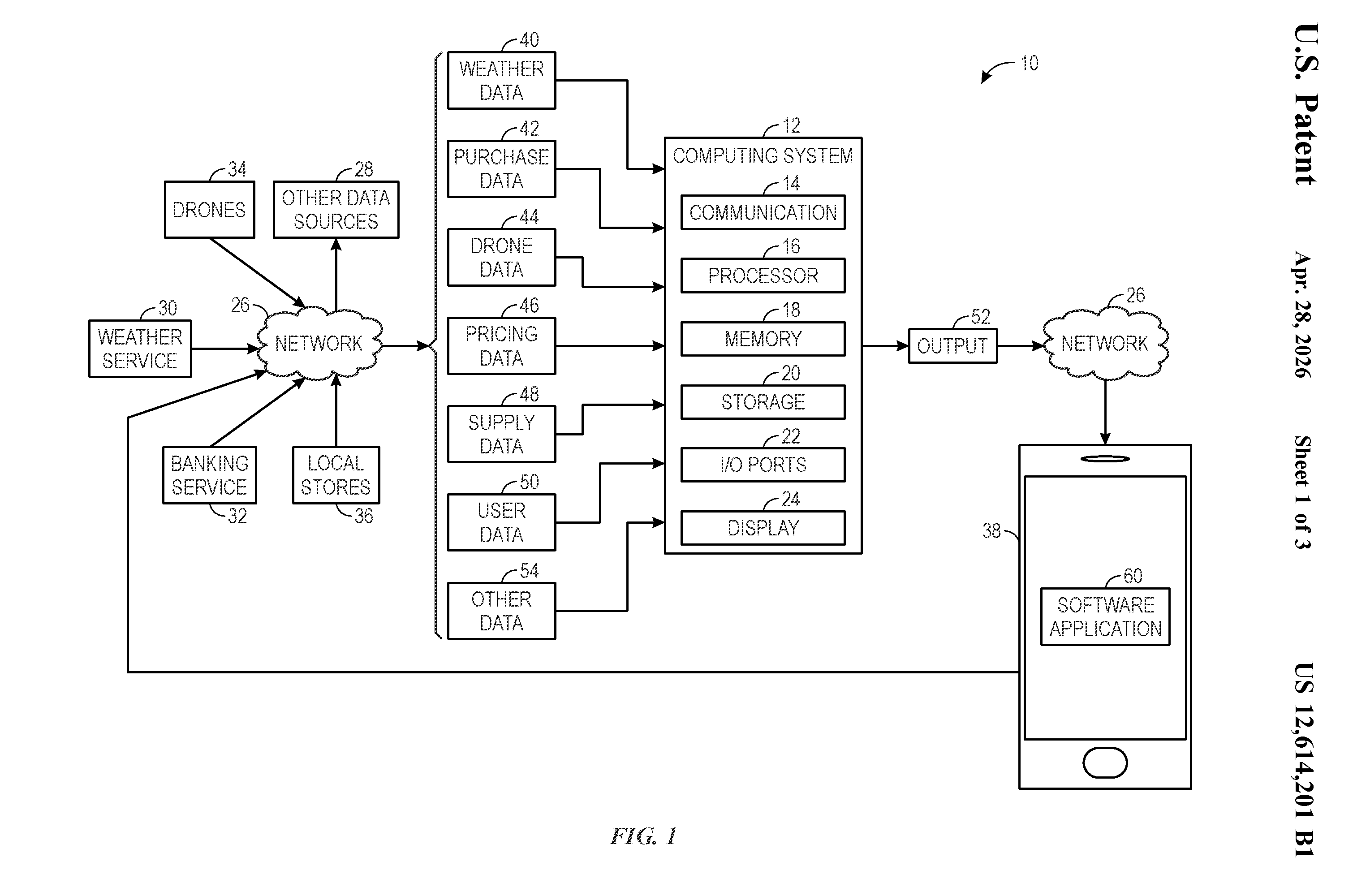
Guidance systems and methods for supply chain issues
 View patent document
A guidance system includes one or more processors and memory storing instructions executable by the one or more processors to cause the one or more processors to receive data from multiple data sources, receive a geographic location associated with a user device, and to identify a forecast of an event for the geographic location based on the data. The instructions are executable by the one or more processors to cause the one or more processors to, in response to identifying the forecast of the event for the geographic location and based on the data, predict an occurrence of one or more supply chain shortages of one or more items in an area associated with the geographic location.
Systems and methods for sprinkler control based on environmental conditions
 View patent document
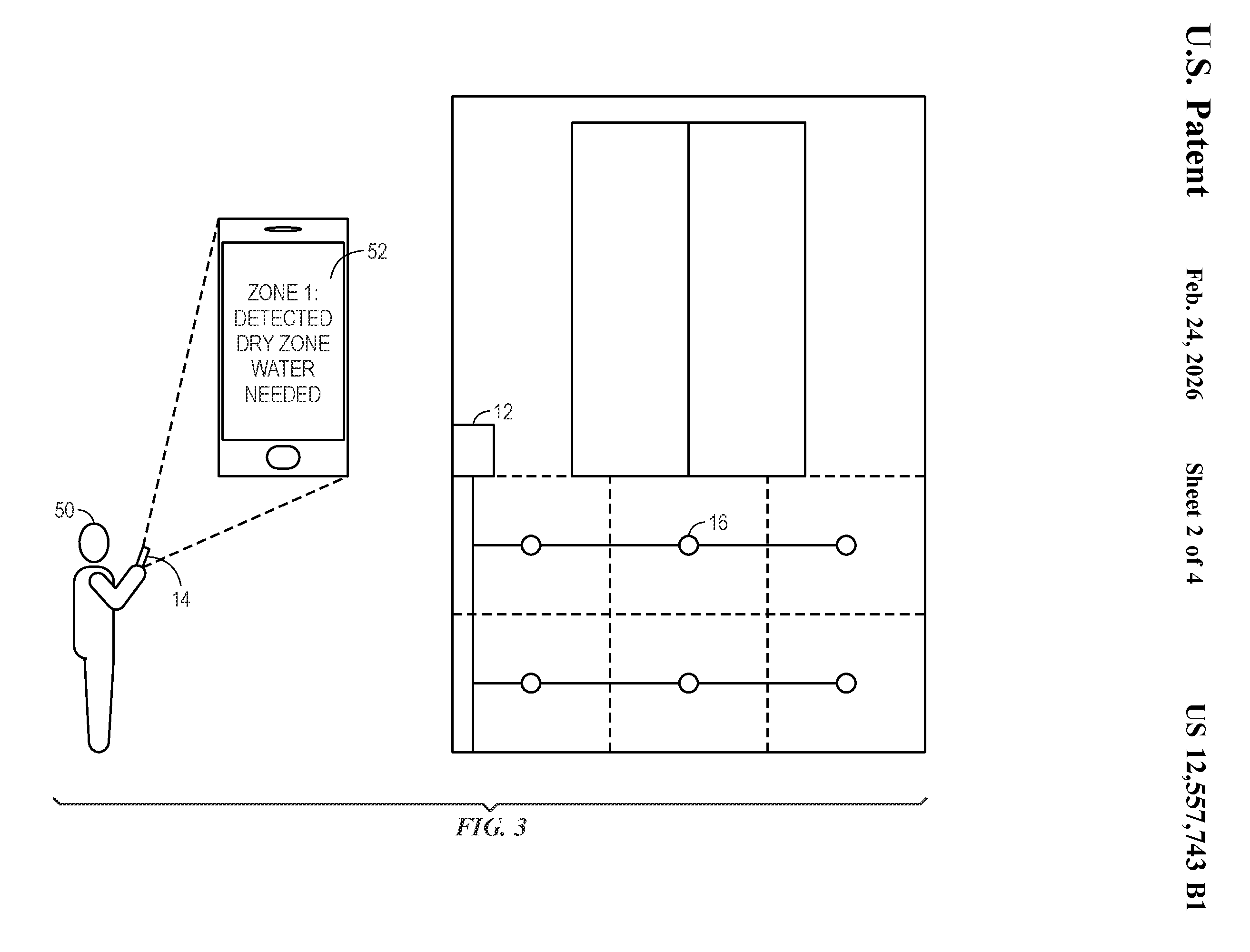
The present disclosure is generally directed toward a system for sprinkler system control based on environmental conditions. The system may include one or more processors and memory storing instructions executable by the one or more processors to cause the one or more processors to determine a change in an environmental condition for an area. The instructions are also executable by the one or more processors to cause the one or more processors to identify multiple distinct sprinkler systems associated with multiple distinct properties in the area and transmit control instructions to the multiple distinct sprinkler systems associated with the multiple distinct properties in the area in response to the change in the environmental condition.
Automatic identification of, and responding to, cognition impairment
 View patent document
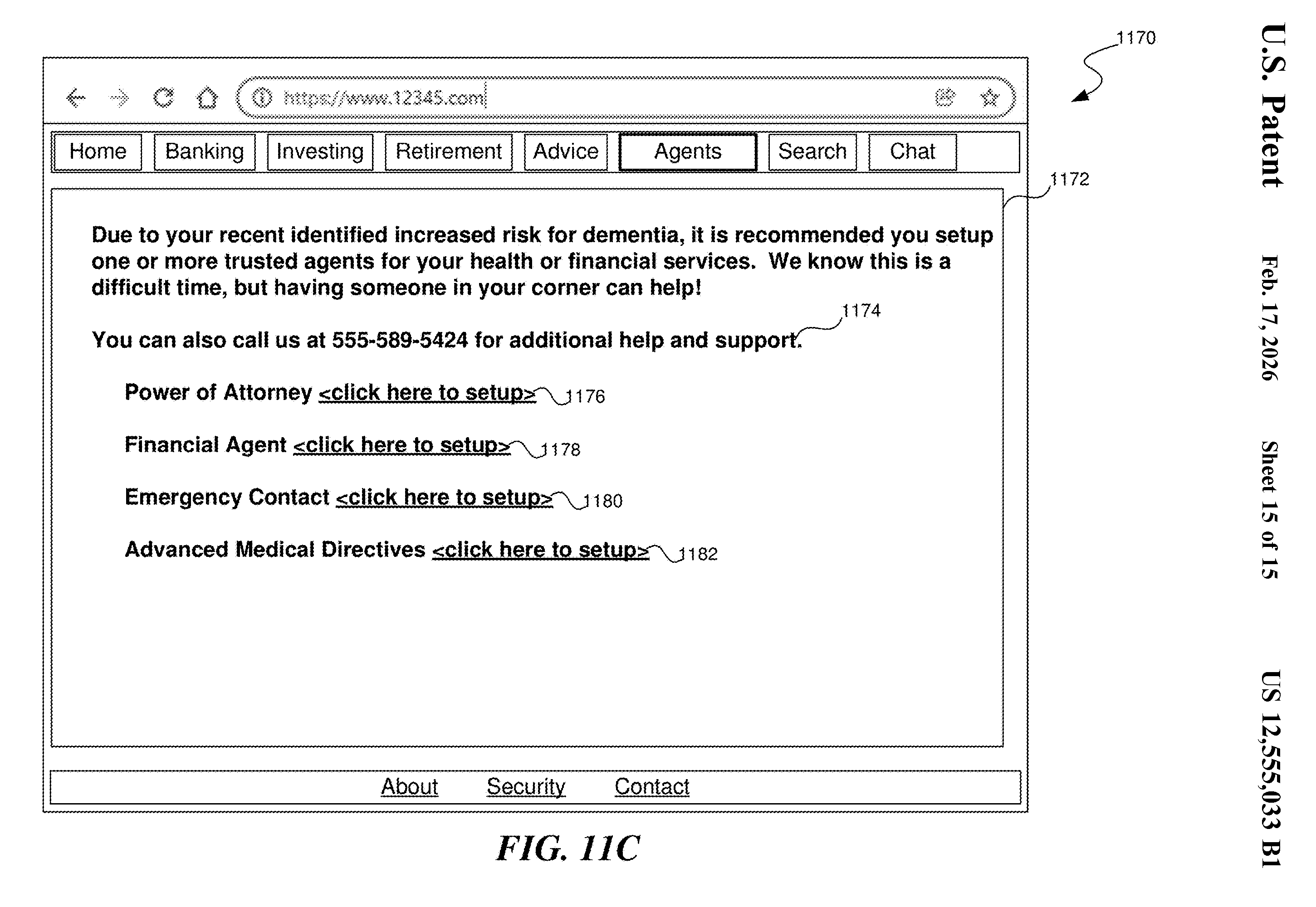
Aspects of the present disclosure are directed to a cognition analysis and response system that can A) generate machine learning training data and use it to build a cognitive impairment machine learning model; B) identify cognitive impairments by applying the cognitive impairment machine learning model and performing a false positive/false negative analysis; and C) apply various automated adaptive measures for users with identified cognitive impairment. The cognition analysis and response system can apply the cognitive impairment machine learning model and can analyze these results to identify false positive and false negative cognitive impairment determinations by analyzing result confidence values, determining whether the result matches an expected progression of cognitive impairment, and/or analyzing external factors which may have caused incorrect results. The cognition analysis and response system can then validate or invalidate the result or exclude or apply weighting factors to parts of the input before regenerating the result.
Systems and methods for smart home unification via sensor-based detection
 View patent document
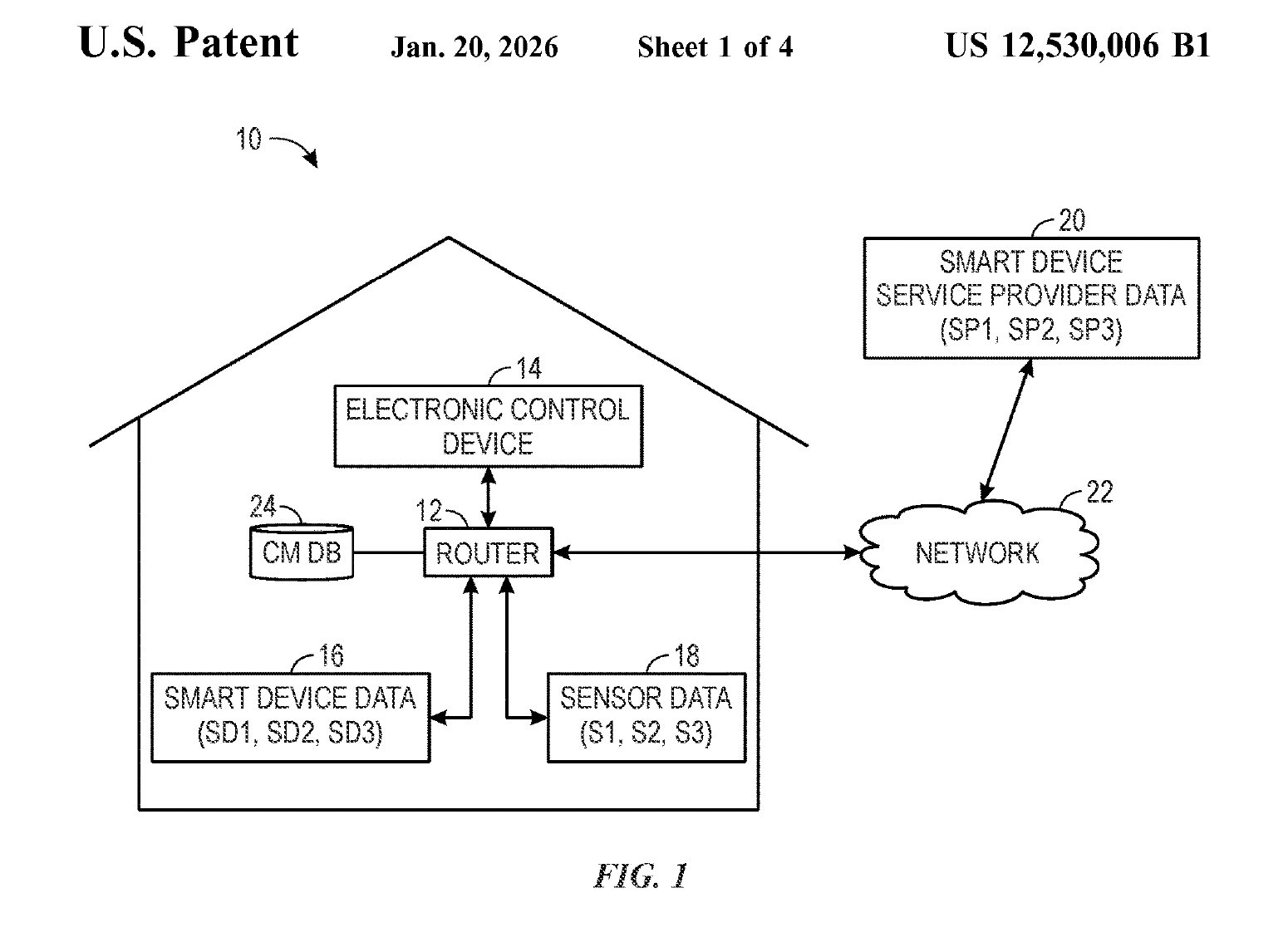
A system includes a computing device comprising a processor and a memory with instructions configured to cause the processor to identify smart devices communicating with service providers and extract smart device data associated with the smart devices. The smart device data is indicative of command signals sent from the service providers to control the smart devices to perform actions. The processor may identify sensors disposed within a proximity of the smart devices and configured to collect sensor data associated with the smart devices and receive the sensor data from the sensors, where the sensor data is indicative of the actions performed by the smart devices. The processor may identify command assumptions based on the sensor data and the smart device data, where the command assumptions correspond to a content of the command signals and provide the command assumptions to an electronic device for display.
Systems and methods for sandbag deployment
 View patent document
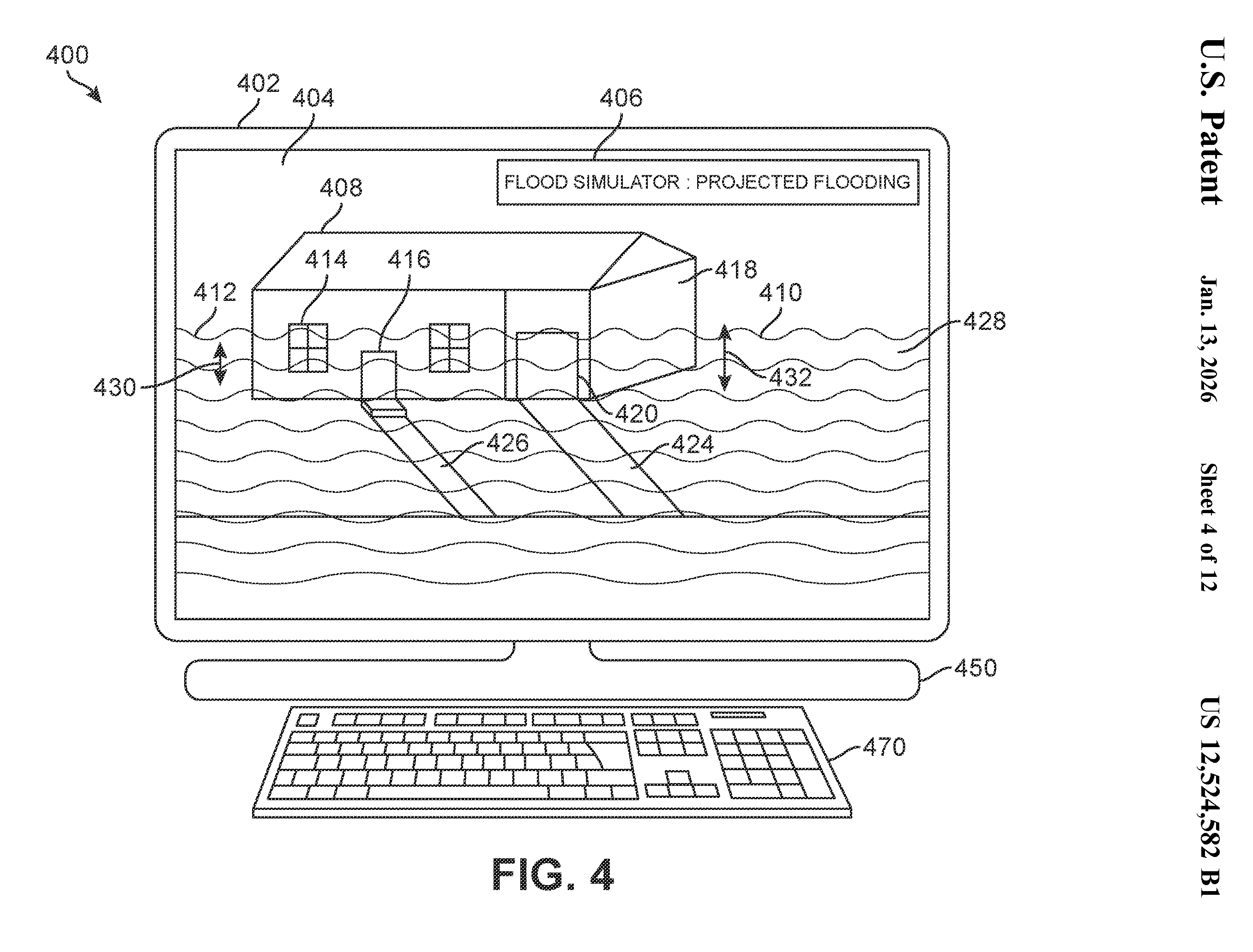
A system and method for implementing the deployment of sandbags so as to mitigate any damages when flooding is forecast. The system may use local weather information, local topographical information and current flooding conditions to produce a virtual map showing suggested sandbag deployment to mitigate flood damage. Such a virtual map is interactively displayed in a virtual home environment. The user interacts with the virtual home environment via an avatar. RFID tags, or any other suitable near field identification technology, are placed inside the sand bags such that the actual locations of the sandbags can be compared to the suggested deployment.
Blockchain based verification of electronic addresses or communication identifiers
 View patent document
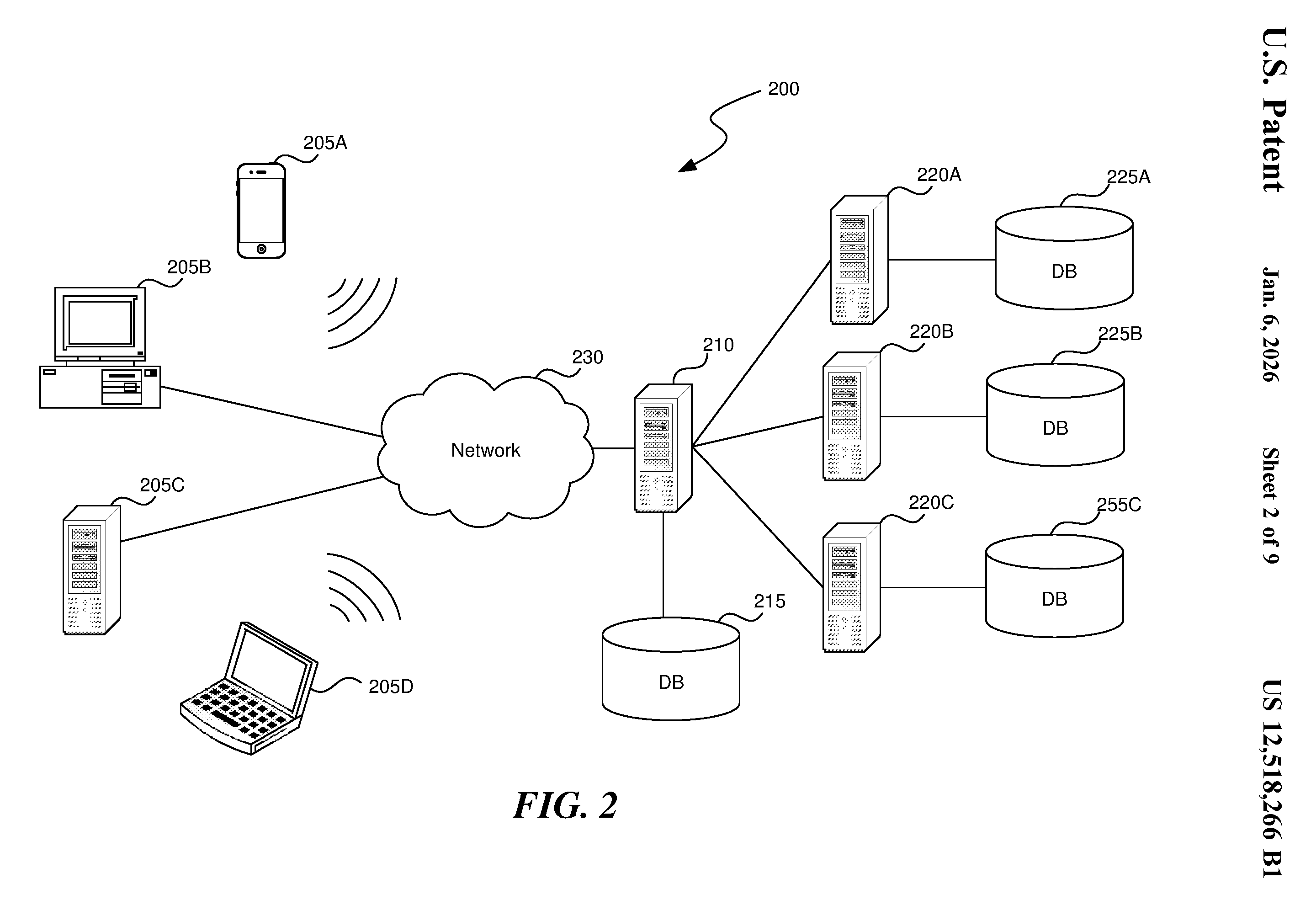
Aspects of the present disclosure are directed to verifying a communication identifier or electronic address using one or more blockchains. Implementations mint non-fungible tokens (NFTs) that correspond to the electronic addresses and/or communication identifiers. A person or company can communicate with third-party entities via the electronic addresses and/or communication identifiers. A given third-party entity can verify that a NFT that corresponds to the specific electronic address and/or communication identifier the given third-party is interfacing with has a corresponding minted NFT. The existence of such a minted NFT verifies that the specific electronic address and/or communication identifier has been registered with a trusted authority. The third-party entity can then safely interact with the electronic address and/or communication identifier once receiving the verification result.
Mutual authentication system
 View patent document
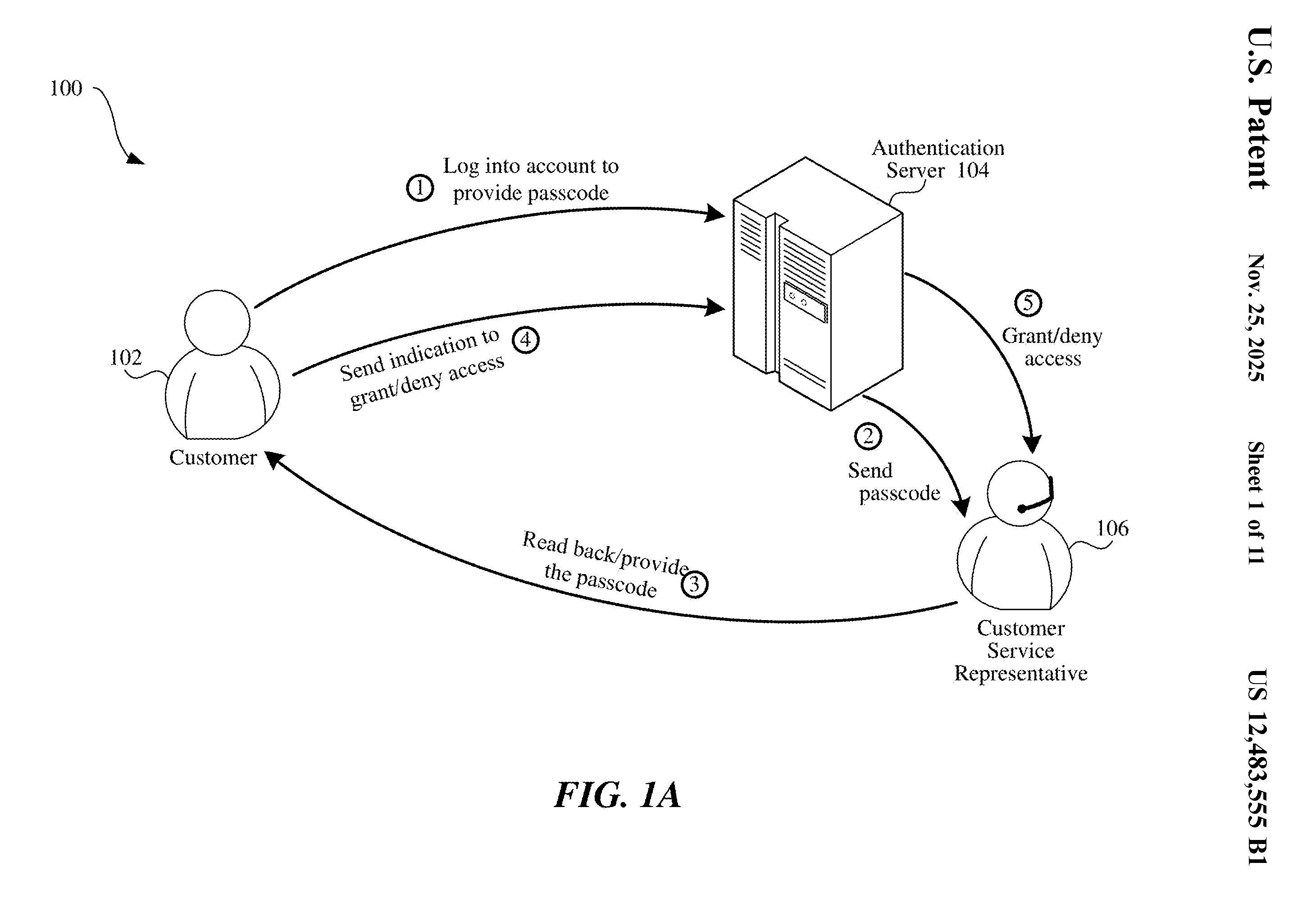
Mutual authentication and CSR verification techniques are described in this patent document. When a first person calls a second person, neither of them know that the other person is who he or she says he or she is. After a second person receives the call, the second person can log into a provider portal using a user device. After the second person logs in, the second person can see a verification of the call, can input on the user device a time passcode, or can receive such as passcode from a central system to authenticate the first person. The first person can provide the passcode to the second person. Upon receiving the inputted passcode, the second person can use his or her user device to indicate that the time passcode is correct so that the second person can be authenticated to access the first person's account.
Automatic identification of, and responding to, cognition impairment
 View patent document
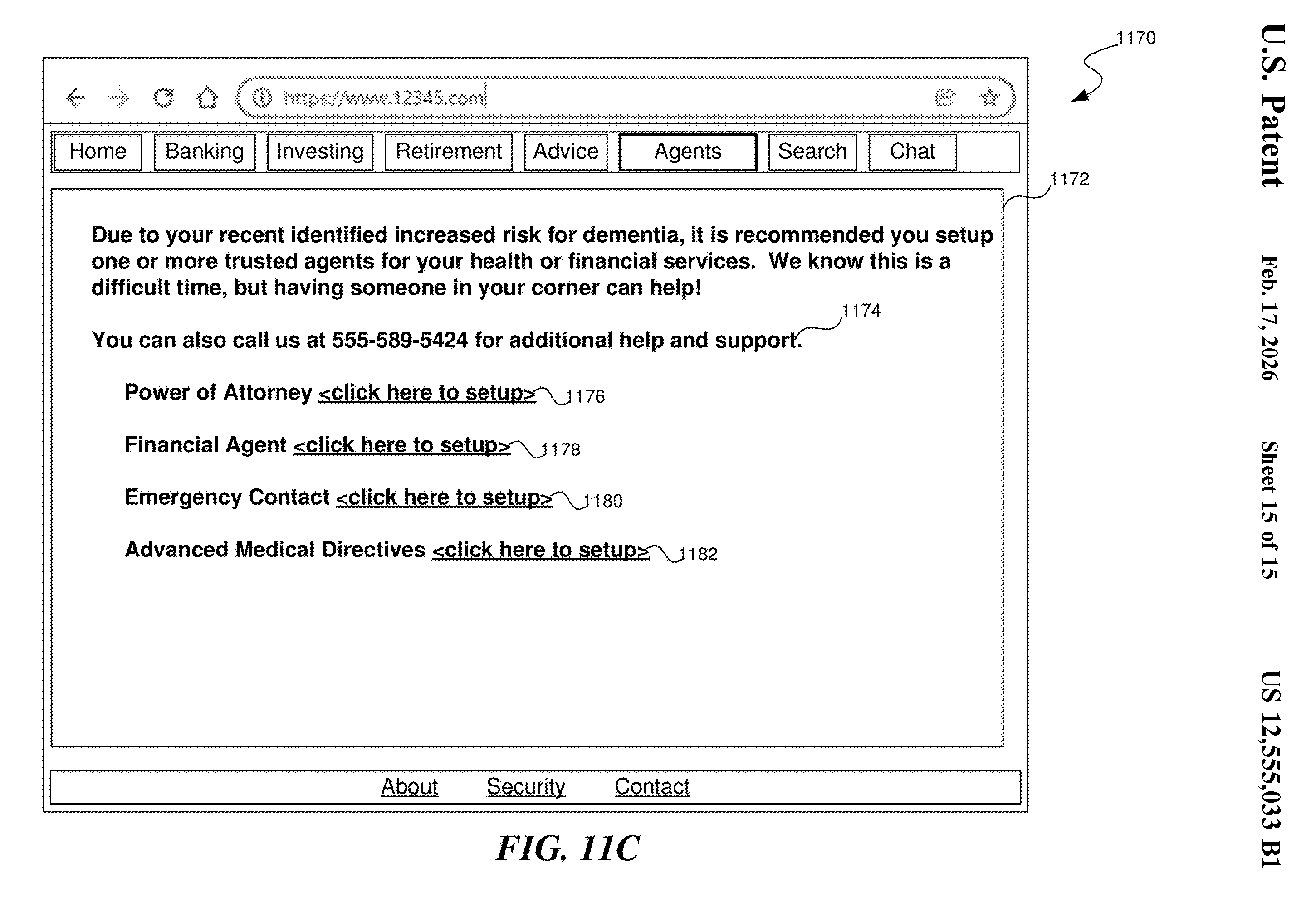
Aspects of the present disclosure are directed to a cognition analysis and response system that can A) identify and classify machine learning training data and use the training data to build a cognitive impairment machine learning model; B) identify cognitive impairments by applying the cognitive impairment machine learning model and performing a false positive/false negative analysis; and C) apply various automated adaptive measures for users with identified cognitive impairment. The cognition analysis and response system can generate training data by using an unsupervised training process and verifying results with validations of training items that have been pre-classified. The cognition analysis and response system can then iterate through each set of inputs paired with cognitive impairment classification, applying a machine learning model and updating the model based on a comparison of the model output to the cognitive impairment classification.
Eye monitoring and protection
 View patent document
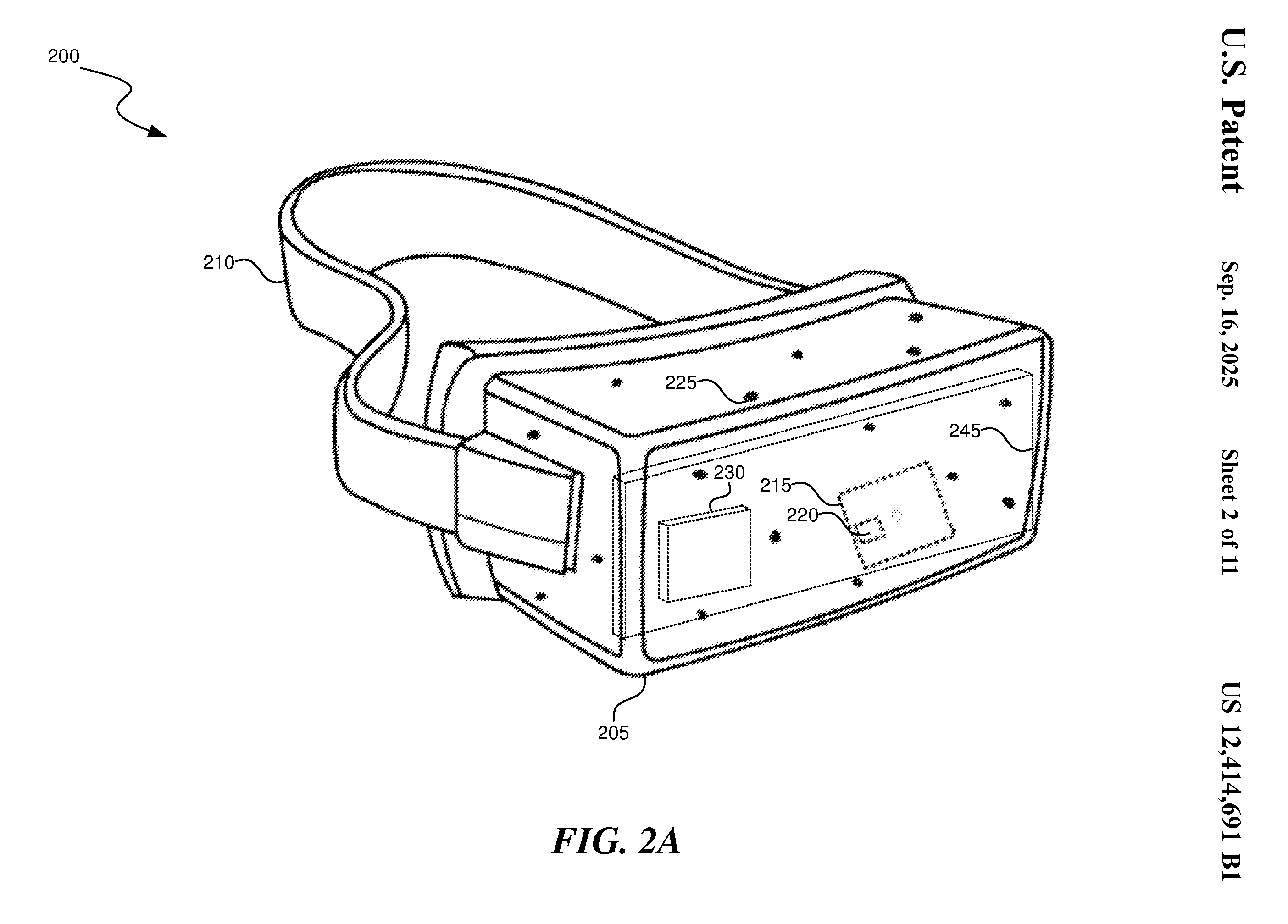
An eye-monitoring system monitors and relieves, or even prevents, eye fatigue in users of display screens. The system monitors indicia of eye fatigue in the user, analyzes whatever information the monitoring uncovers, and assigns a score to the monitored indicia. For example, rubbing the eyes is a pretty strong sign of eye fatigue, while the system may have to monitor pupil dilation for quite a while to decide that eye fatigue is likely. The assigned score is associated with the likelihood that the user has, or will soon have, eye fatigue. If the score so warrants, then the system takes remedial action to lessen any current fatigue and to hold off the development of more fatigue. As an example of remedial action, the system alters the visual content seen by the user to shift the content's color palette slightly or to decrease its displayed brightness.
Systems and methods for sensor-based detection of property damage
 View patent document
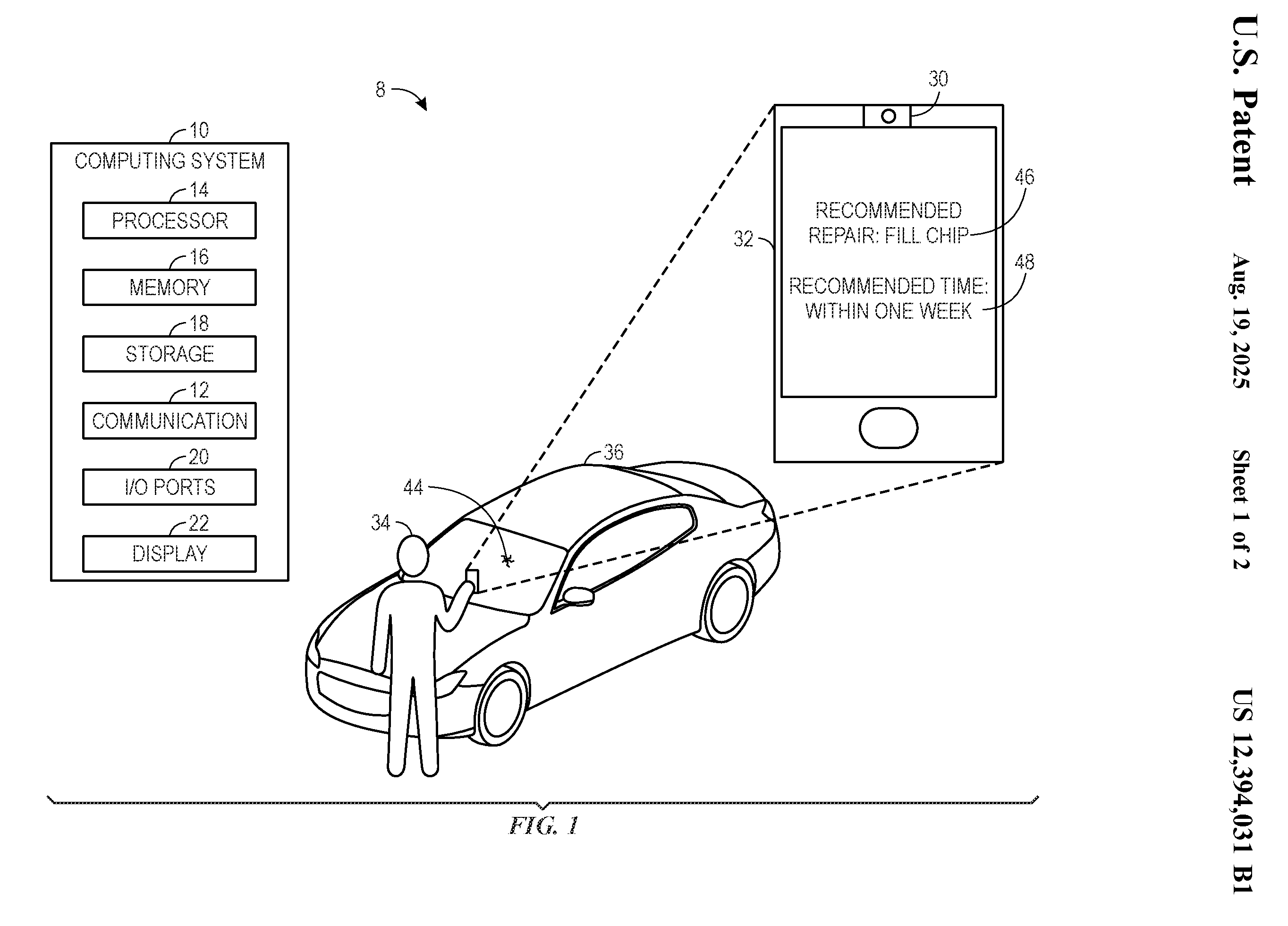
A system includes one or more processors configured to receive one or more sets of LIDAR sensor data corresponding to damage of a property. The system is configured to analyze the one or more sets of LIDAR sensor data and determine a repair recommendation and recommended time period of repair for the associated damage of the property. The system may also detect changes to property condition over time and monitor condition of the property over time via LIDAR sensors and alert the user when property condition decreases and a repair is recommended.
Systems and methods for targeted delivery of supplies during emergency events
 View patent document
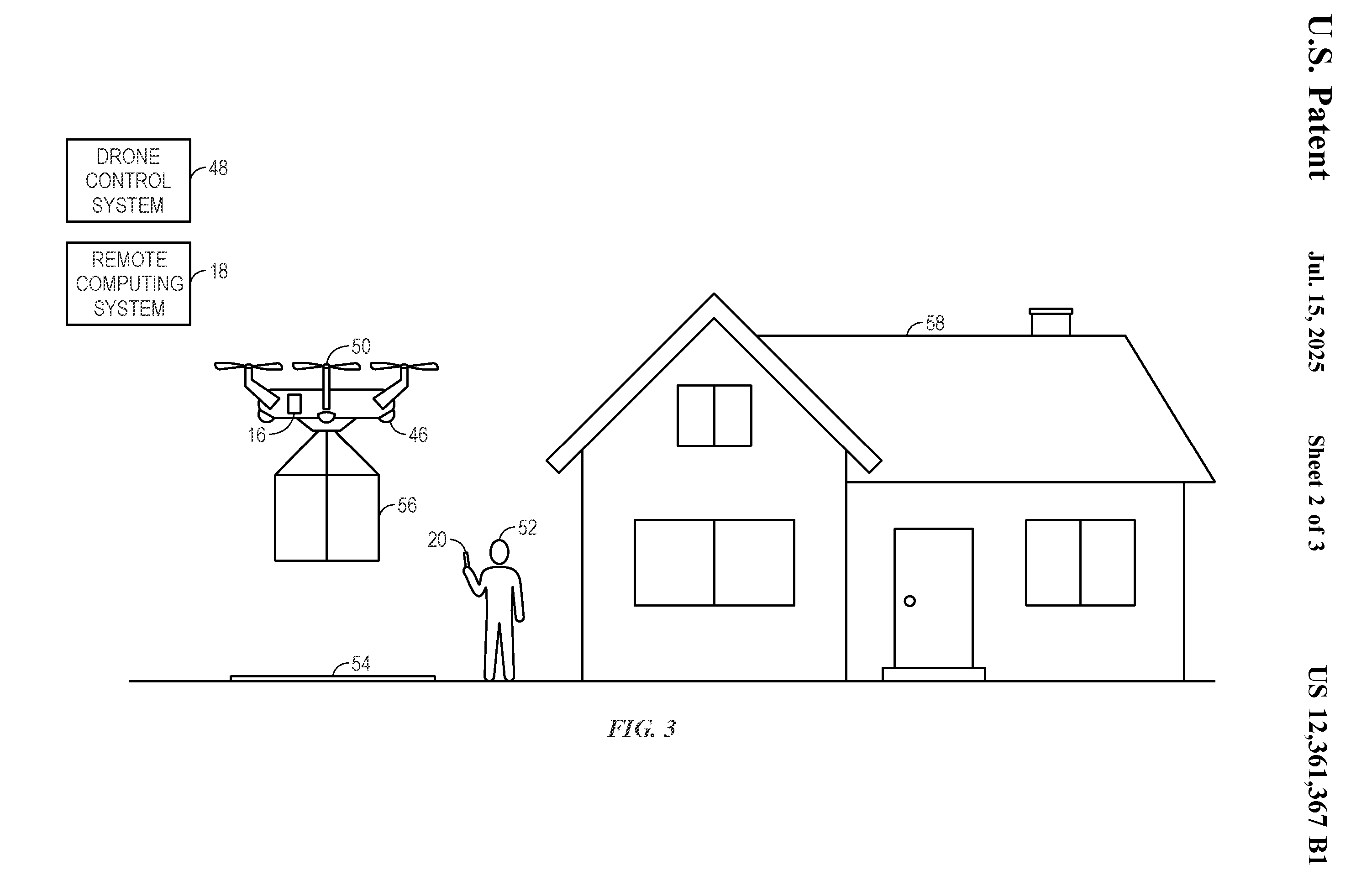
A supply delivery system includes one or more processors and one or more memory devices storing instructions executable by the one or more processors to cause the one or more processors to instruct an aerial vehicle to travel within a geographical area, instruct an imaging device carried by the aerial vehicle to capture image data as the aerial vehicle travels through the geographical area, analyze the image data to identify an identification code on a physical target, instruct the aerial vehicle to dispense one or more items from the aerial vehicle at or near the physical target.
System and method for broadcasting navigation instructions
 View patent document
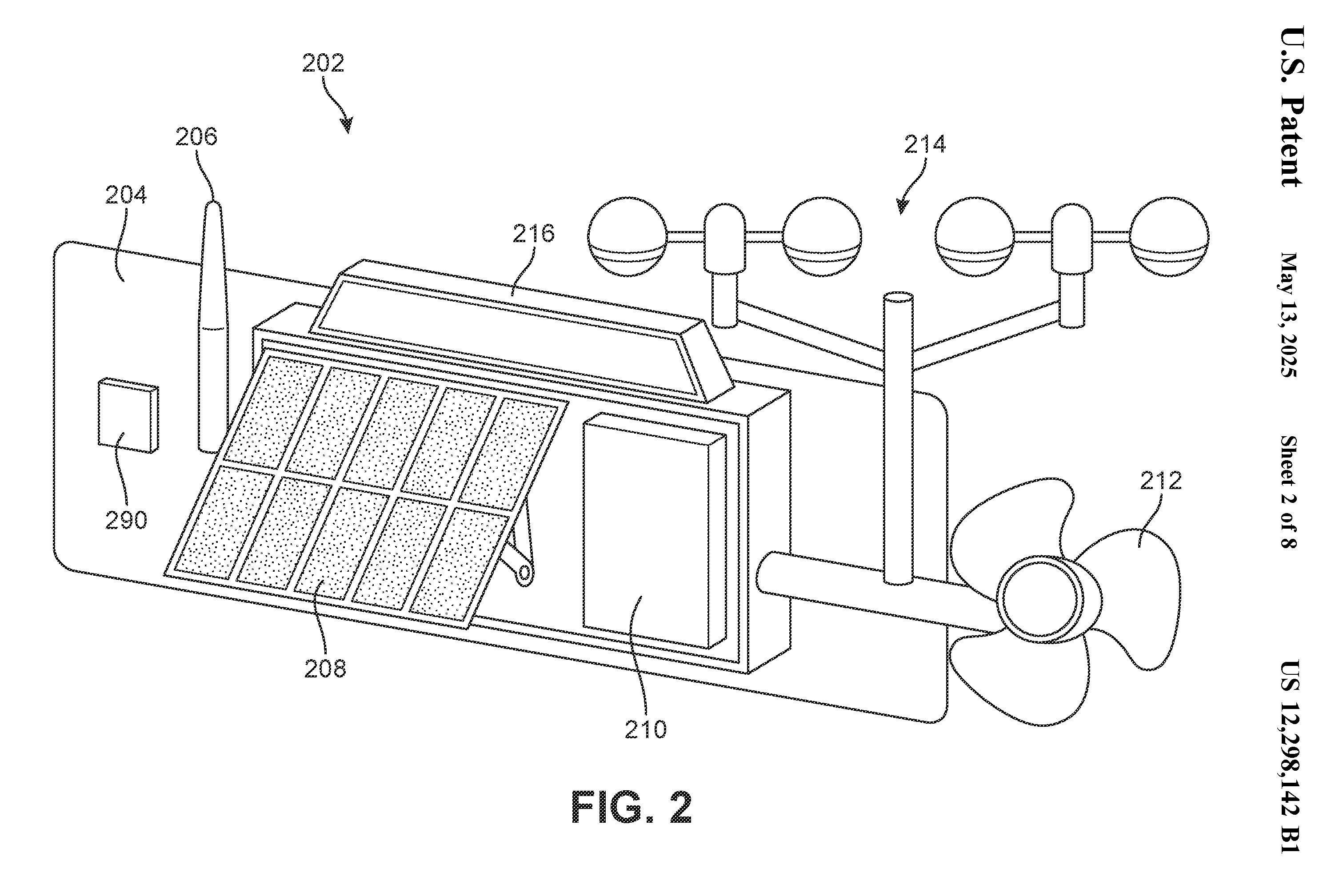
A method and system for managing roadside information and distributing navigation information is disclosed. The embodiments provide a roadside device network configured to collect sensor data and vehicle-originated data about the local roadway. The roadside devices are spaced along the road and are connected to a central server to collect information about the impaired road condition, determine an approximate location of an impaired road condition, calculate an alternate route, and transmit an alternate route to a roadside device to transfer the information to a passing vehicle.
Foundation tilt reporting systems and methods
 View patent document
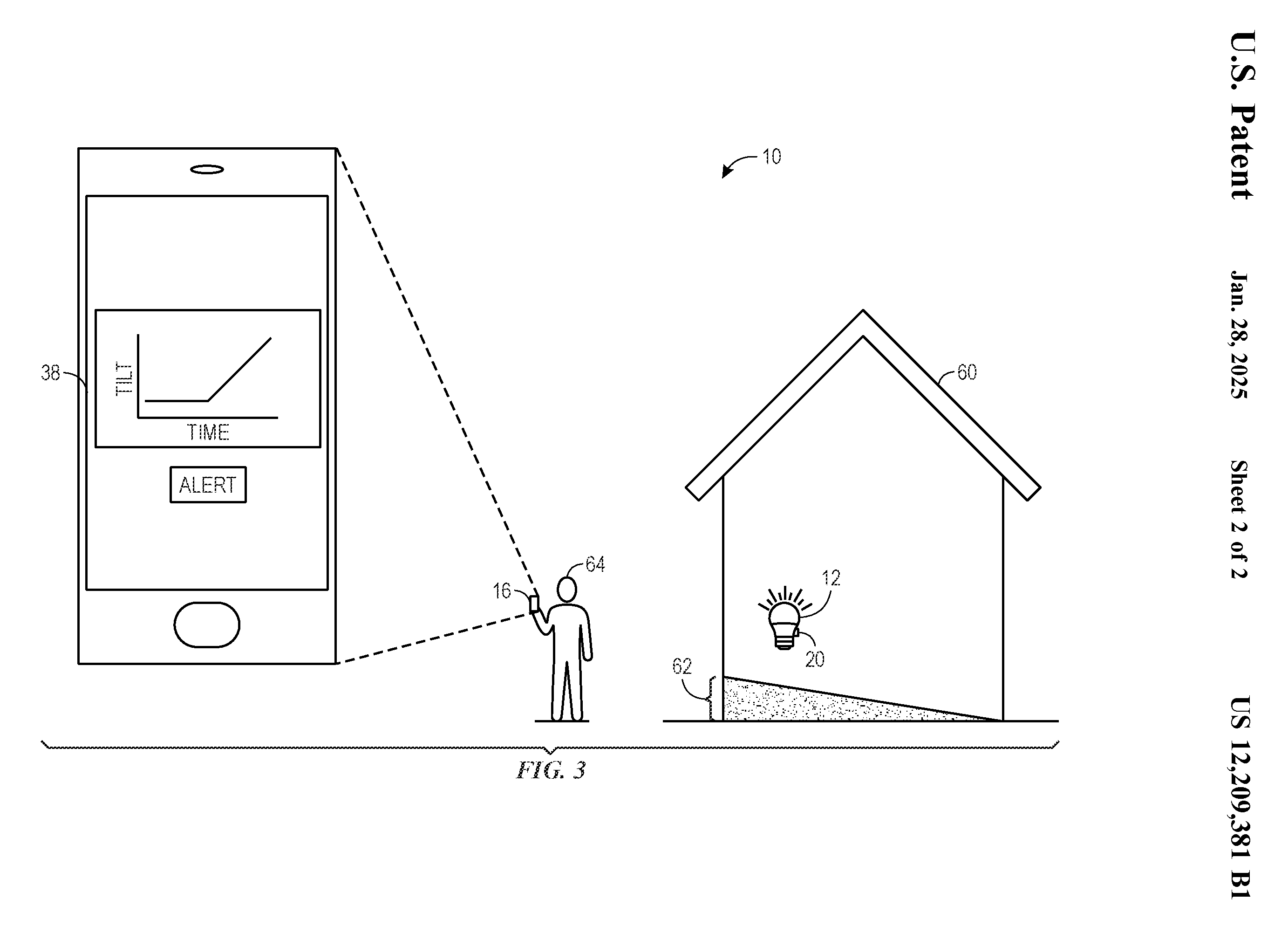
A foundation tilt reporting system includes a lightbulb with one or more emitters configured to emit light. The foundation tilt reporting system also includes one or more sensors configured to generate signals indicative of a current tilt of a foundation of a structure. The foundation tilt reporting system further includes one or more processors and memory storing instructions executable by the one or more processors to cause the one or more processors to access a threshold for the foundation, receive the signals indicative of the current tilt of the foundation from the one or more sensors, compare the current tilt of the foundation to the threshold, and instruct the one or more emitters to emit the light to provide an indication in response to the current tilt of the foundation meeting or exceeding the threshold.
Geofencing with satellite systems
 View patent document
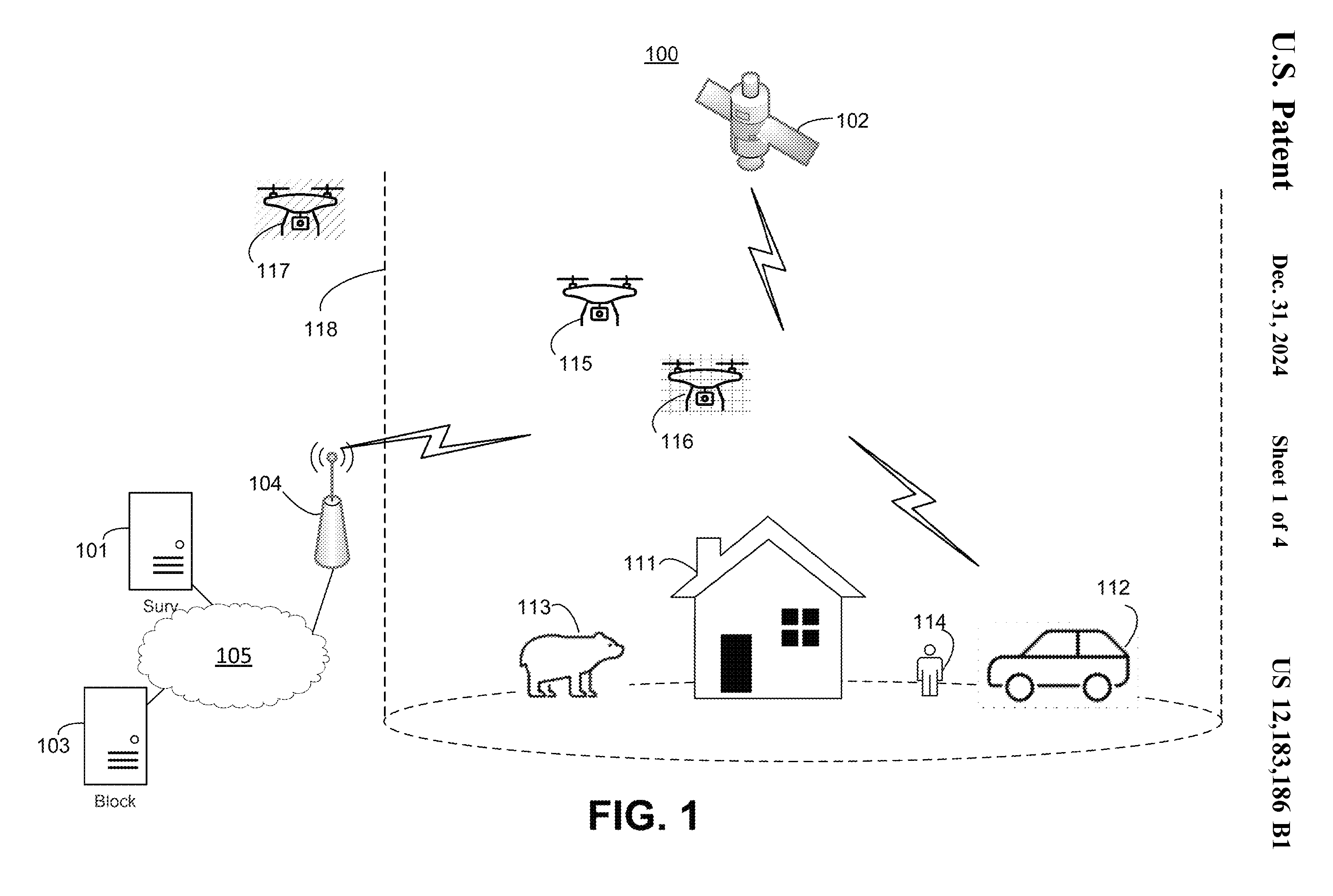
A system may employ one or more satellite sensors to monitor an area; detect a body or thing that should not be present in an area; formulate a response, such as documentation, notifying authorities, or deploying unmanned aerial vehicles; and execute the response. Monitoring an area can be based on a request for surveillance at the area.
Systems and methods to enable machines by forming parasitic relationship
 View patent document
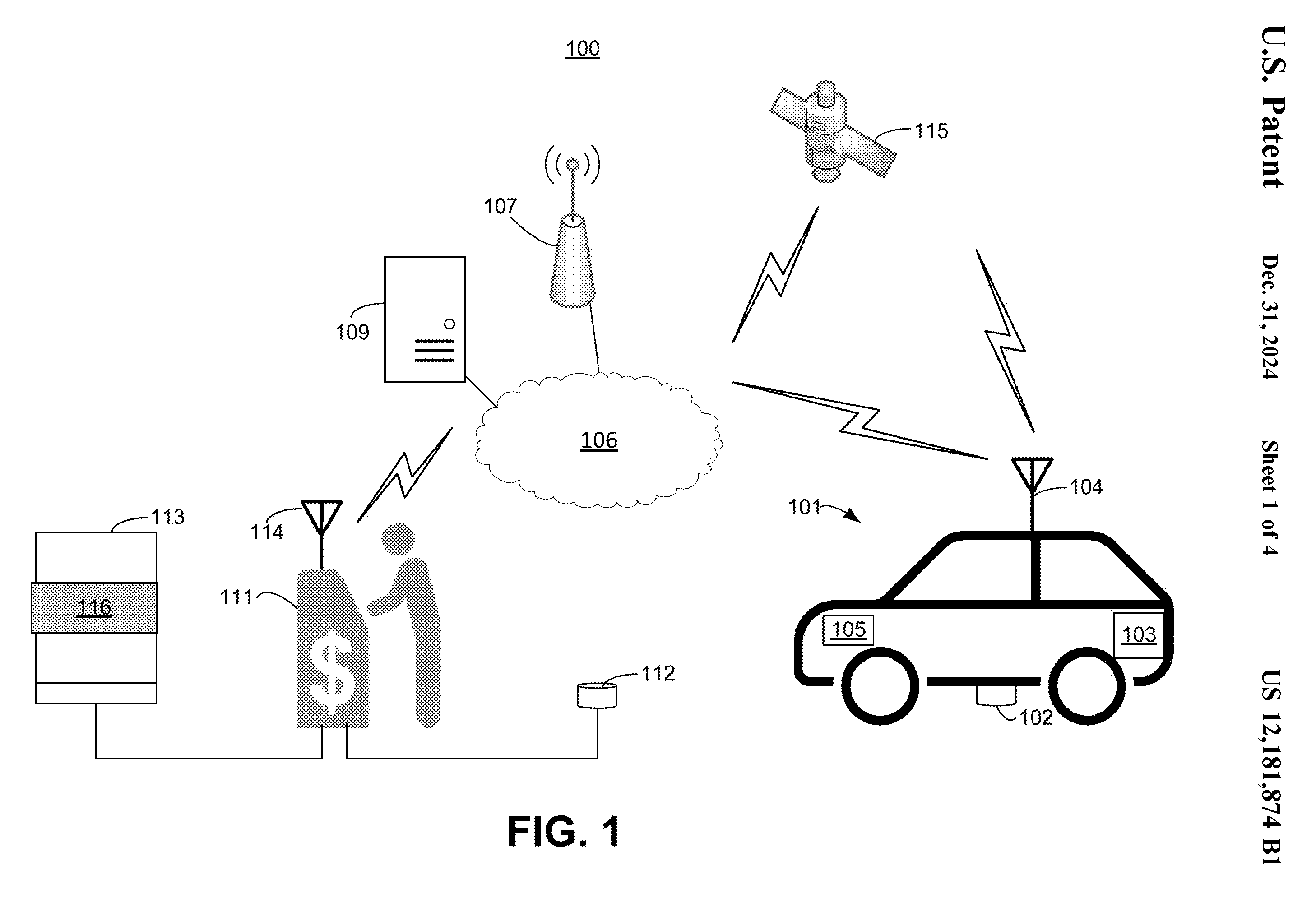
Autonomous vehicles may be terrestrial, aerial, nautical, or multi-mode and may be used to enable communications of other devices. For example, an autonomous vehicle may analyze information about a device outage and based on the information direct an autonomous vehicle to a location of the device to address the outage by adding a capability to the device.
Multi-factor authentication
 View patent document
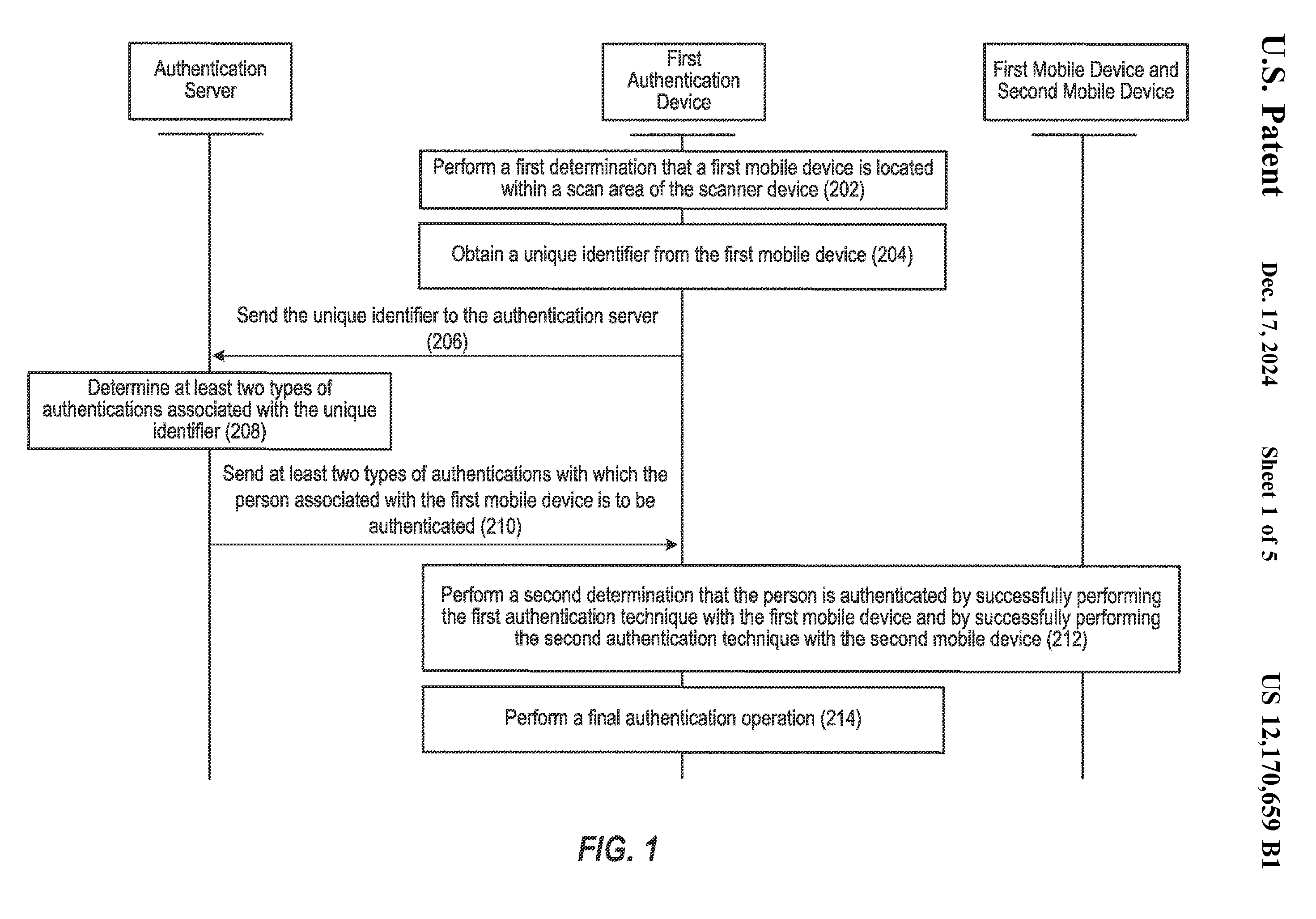
A multi-factor authentication technique can use multiple smart devices to determine whether a person is authenticated by minimizing the extent to which the person is expected to interact with his or her smart devices. In an example multi-factor authentication method comprises performing a first determination, that a first mobile device is located within a wireless range of a device, obtaining a unique identifier from the first mobile device, sending, to a server, the unique identifier, receiving, from the server, information that indicates a first authentication technique and a second authentication technique, performing a second determination that the person is authenticated by successfully performing the first authentication technique with the first mobile device and by successfully performing the second authentication technique with the second mobile device, and performing a final authentication operation in response to performing the second determination.
Smart home hazard notification system
 View patent document
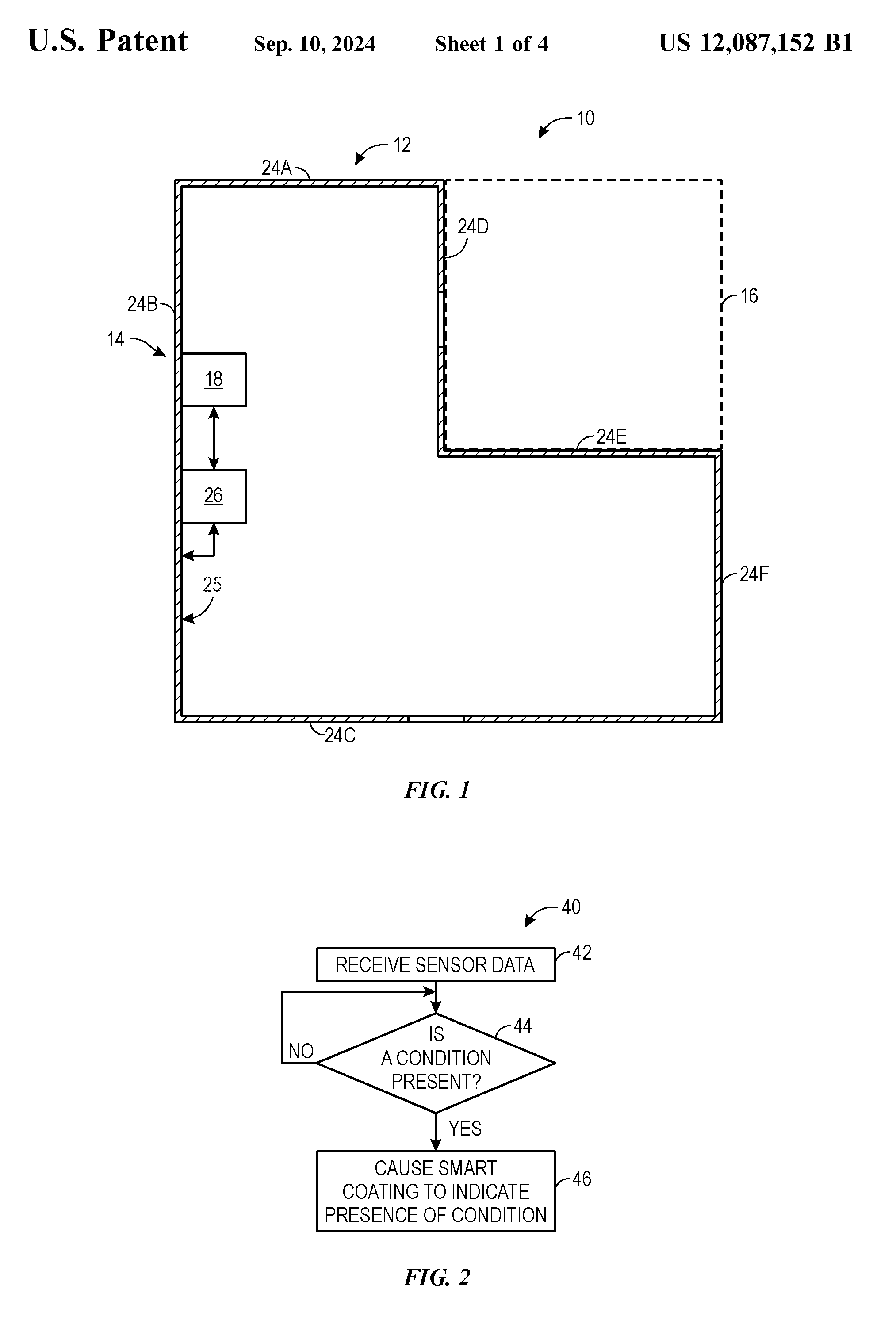
A system includes a building that has a wall that is at least partially covered in a smart paint. The system also includes a sensor that is configured to collect sensor data regarding a condition within the building. The system additionally includes a controller that is operatively coupled to the wall and the smart paint. The controller is configured to receive the sensor data from the sensor, determine whether the condition is present based on the sensor data, and in response to determining the condition is present, cause the smart paint to provide an indication that the condition is present.
Virtual smart device controls
 View patent document
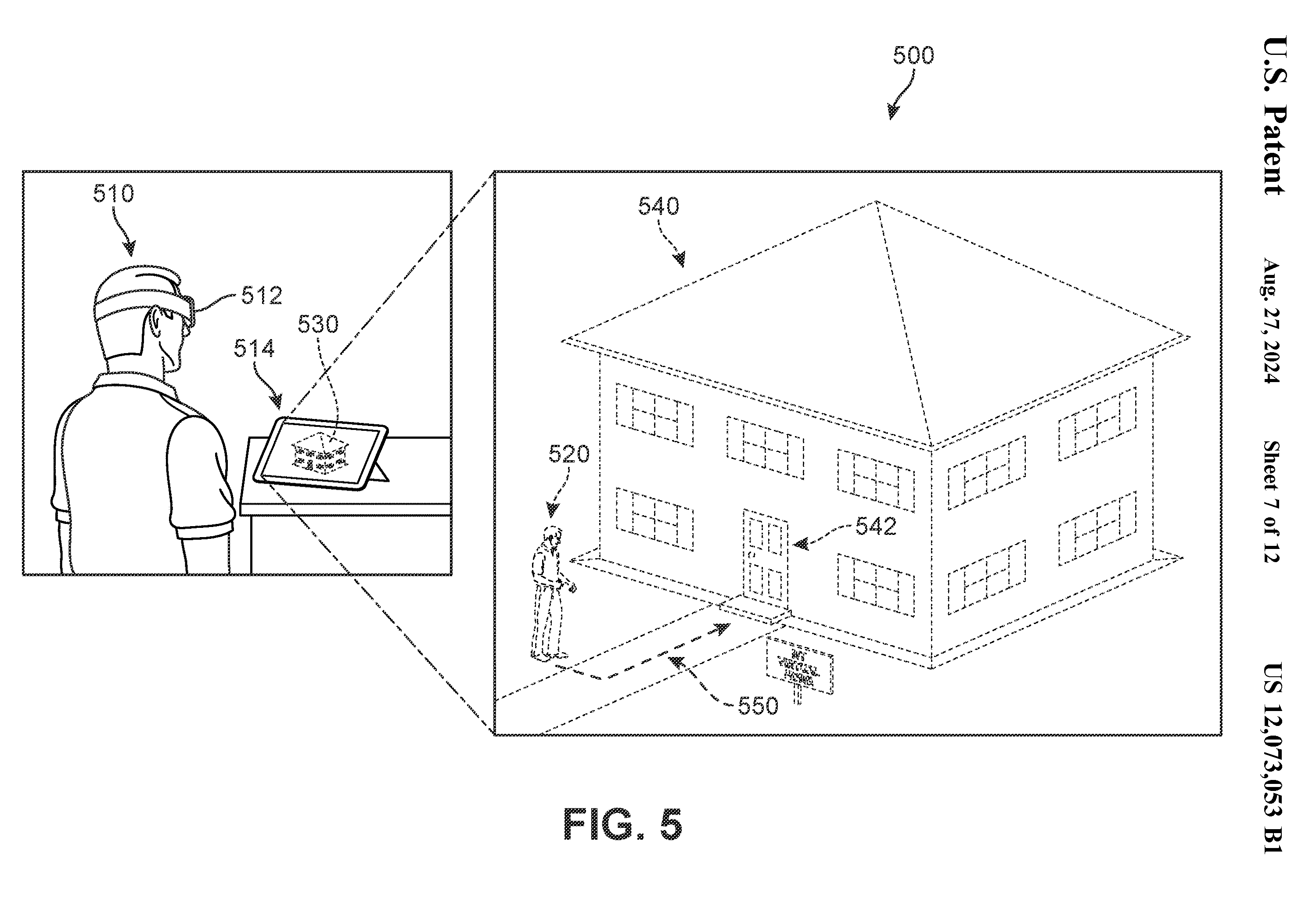
A method and system for creation of a virtual home center is disclosed. The system includes a plurality of IoT or smart devices connected to a network and arranged throughout a physical space, such as a house, apartment building, or other physical structure or edifice. In some embodiments, the devices can serve as beacons and receive sensed information via internal sensors and/or from other nearby devices such as a smoke detector. The sensors can be used to generate and render a virtual home within a virtual environment (e.g., VR/AR). In one example, the system is configured to communicate information between the virtual environment and IoT devices in the user's real home. If the user would like to read and/or modify controls of any IoT devices, they can enter the virtual environment as a virtual avatar and locate the room with the desired smart device.
Systems and methods for proactive monitoring through smart coatings
 View patent document
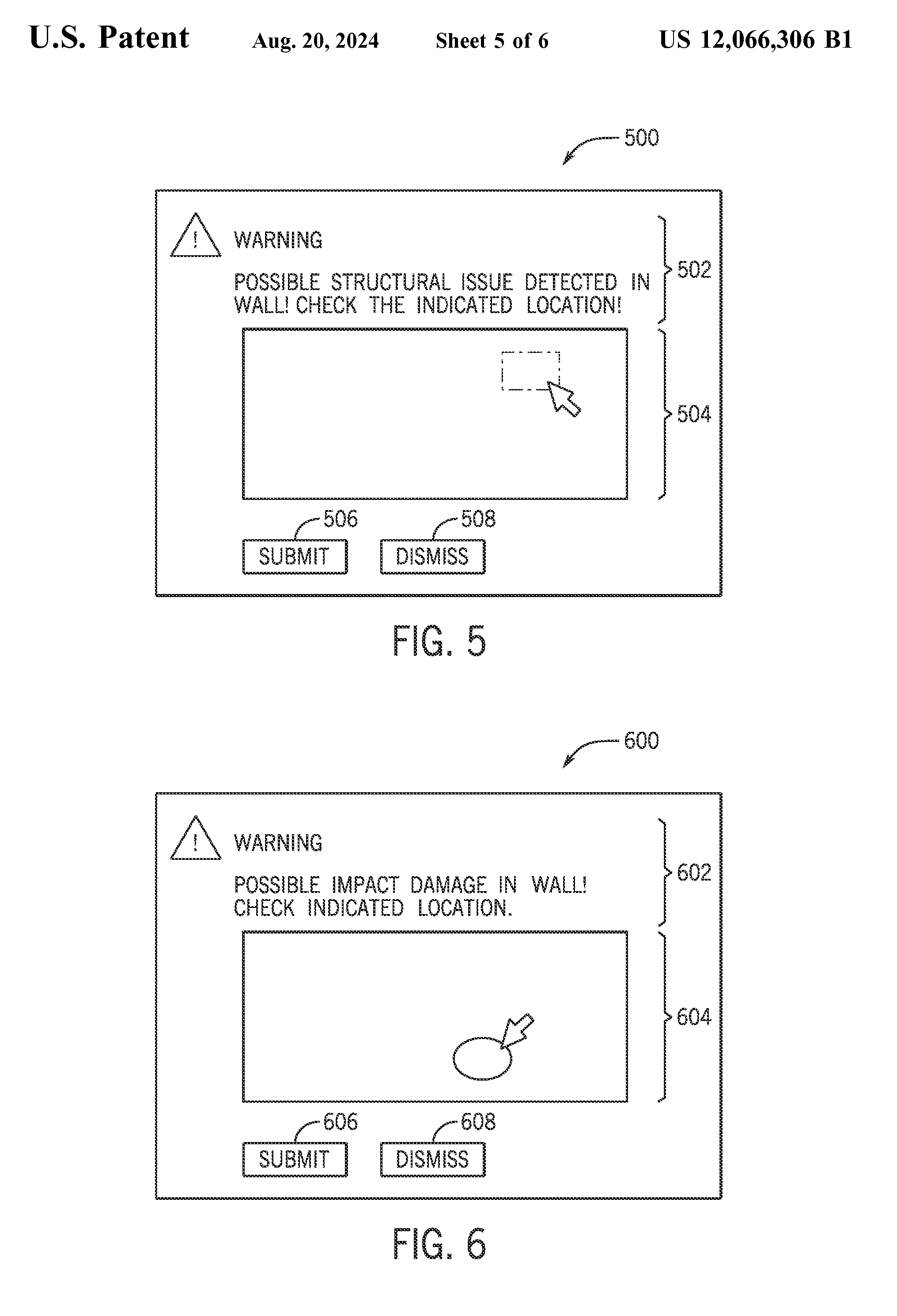
The presently described systems and techniques enable computers to discern impacts and structural weaknesses in objects in a new and cost-effective manner. As capacitive changes (e.g., mutual capacitance between rows or columns of smart coatings) occur in the smart coatings, contact with the object and/or structural weaknesses of the object may be identified, enabling electronic notification and/or action to occur in response to the contact and/or structural weakness.
System and method for pre-emptive property shifting detection and remediation
 View patent document
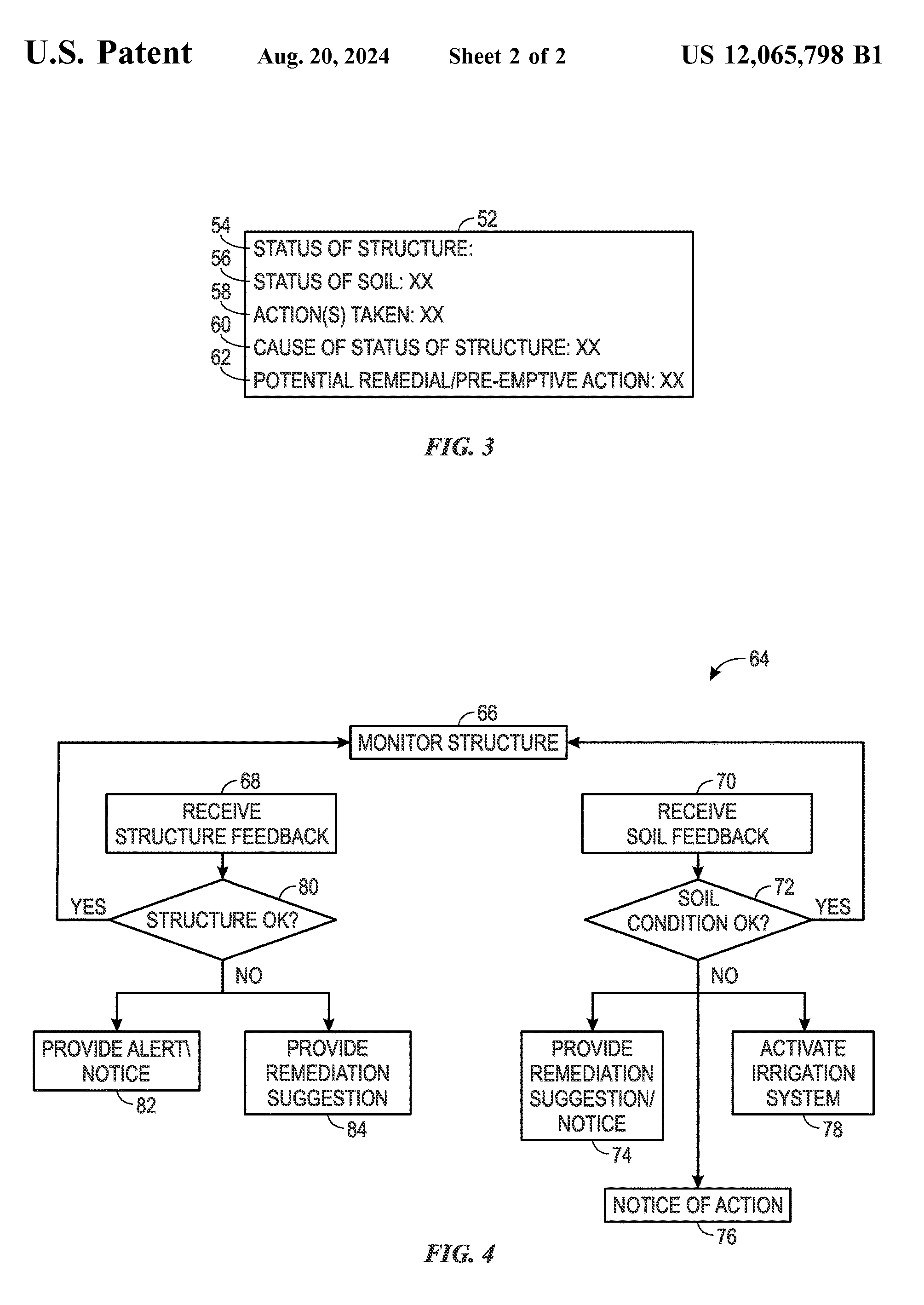
A system for monitoring shifting of a structure includes one or more hardware processors. The system also includes a non-transitory memory, the non-transitory memory storing instructions that, when executed by the one or hardware processors, causes the one or more hardware processors to perform actions. The actions include monitoring the structure for a shift in elevation in a portion of the structure. The actions also include receiving, from a first plurality of sensors, feedback related to a condition of a foundation of a structure. The actions further include determining whether a portion of the foundation of the structure has shifted in elevation based on the feedback. The actions still further include providing a notification when the portion of the structure has shifted in elevation.
Systems and methods for detecting and transmitting driving condition information related to an autonomous vehicle
 View patent document
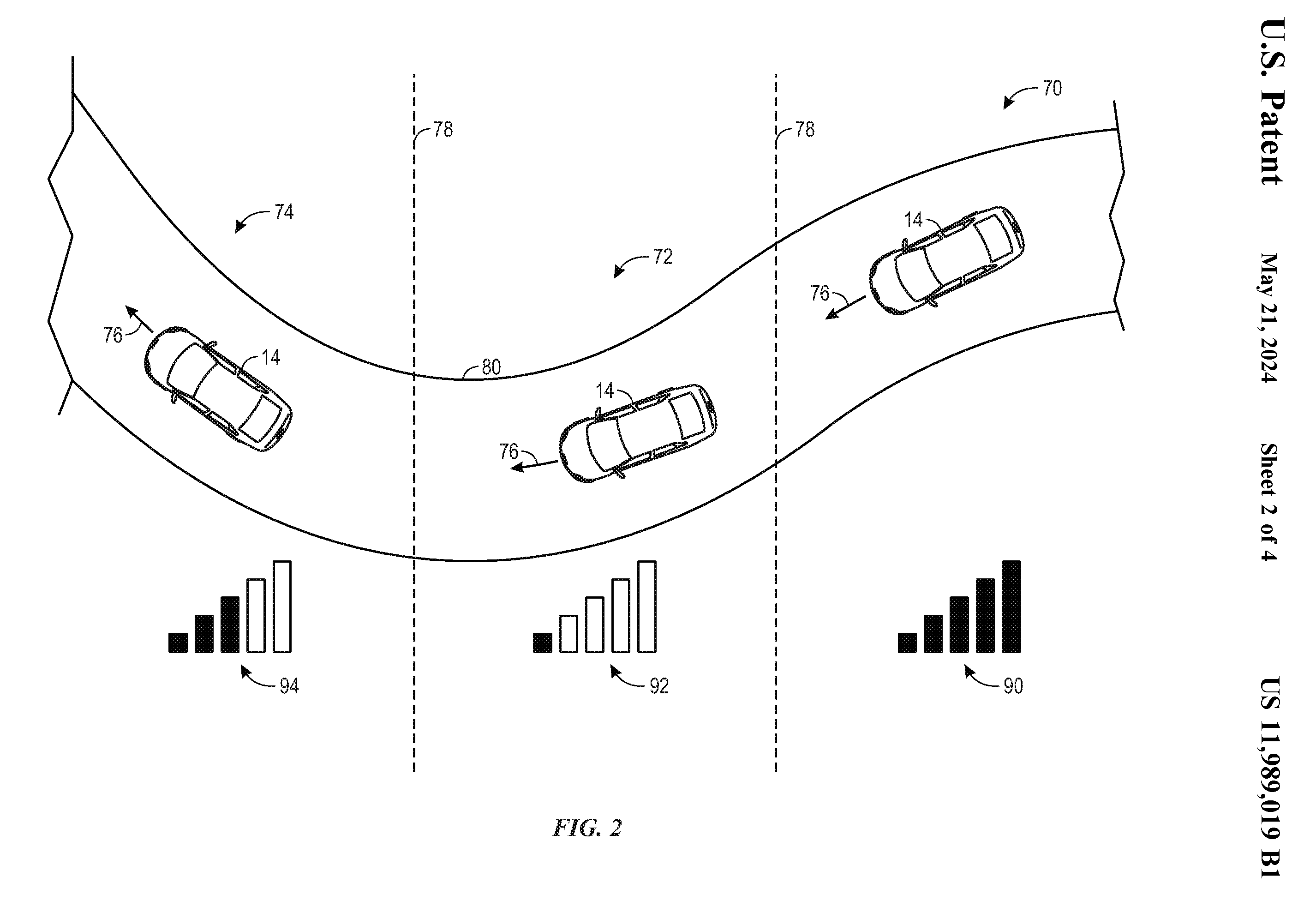
An autonomous vehicle includes vehicle sensors that detect driving conditions and a communication interface communicatively coupled with a driving condition database via a communication network. The driving condition database stores vehicle sensor information indicative of first driving conditions and mobile device sensor information indicative of second driving conditions. Additionally, in response to a connection rating determination logic determining that a connection rating between the communication interface and the communication network below a threshold, a controller of the autonomous vehicle gathers, processes, and stores the vehicle sensor information and the mobile device sensor information for subsequent communication to the driving condition database and operates the autonomous vehicle based on the vehicle sensor information and the mobile device sensor information.
Presenting transformed environmental information
 View patent document
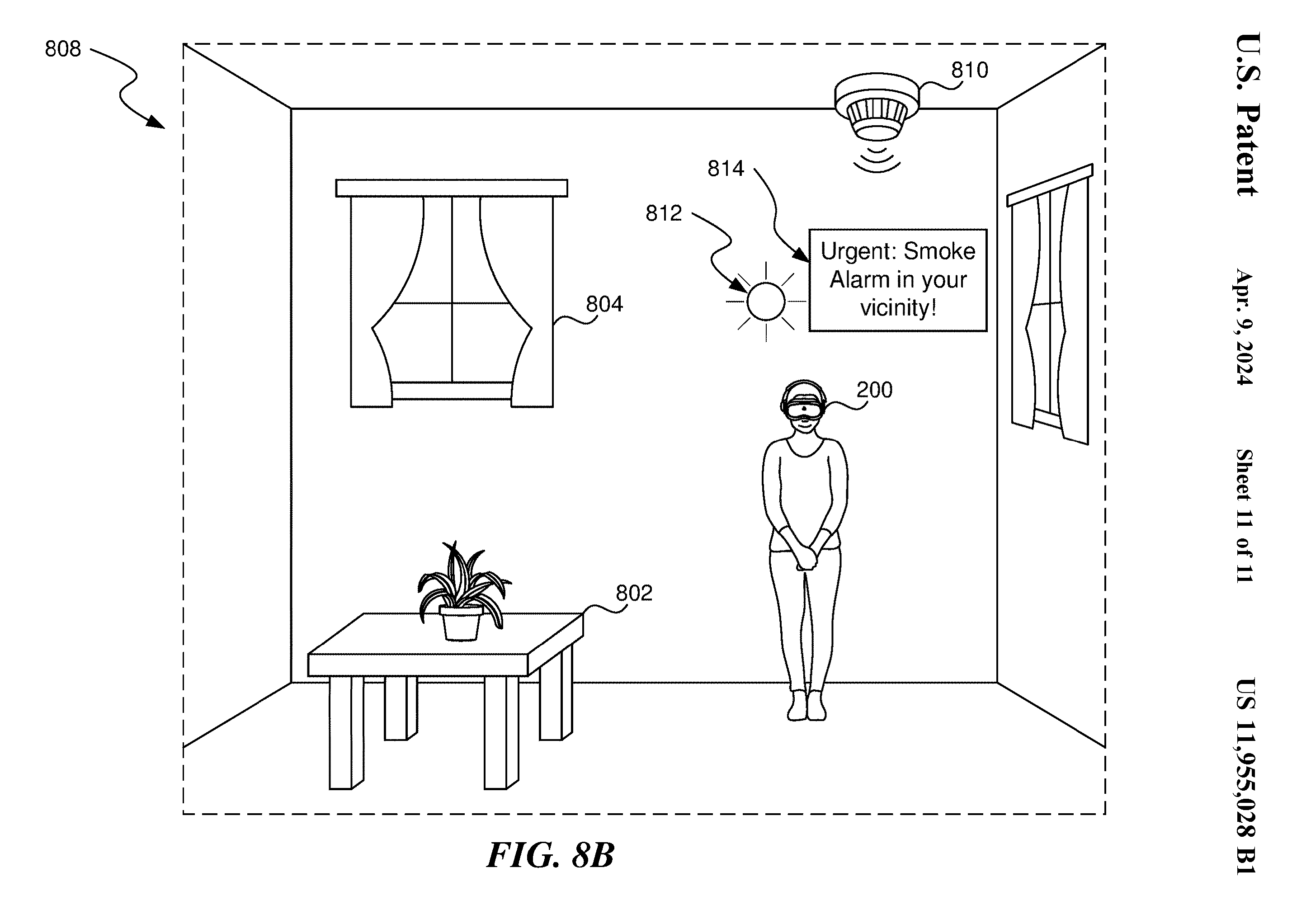
An environment-transforming system transforms a user's environmental information in ways that allow the user to better perceive her environment. For example, the system transforms some aspects of a visual scene into a sound space for a visually impaired user. Once the user learns to interpret the sound space, she avoids walking into an object because a sound cue tells her that the object is in her near environment and roughly where it is. Various types of transformations are possible depending upon the user's needs and preferences. As all people are different, each user has a personalized profile that directs the transformation process. More generally, the environment to be transformed may include aspects of artificial or enhanced reality. The transformed environmental information can be presented to the user in a number of ways, such as in haptic feedback, as directional audio, through oral stimulation, or through modified visual display.
Systems and methods for data pre-fetching
 View patent document
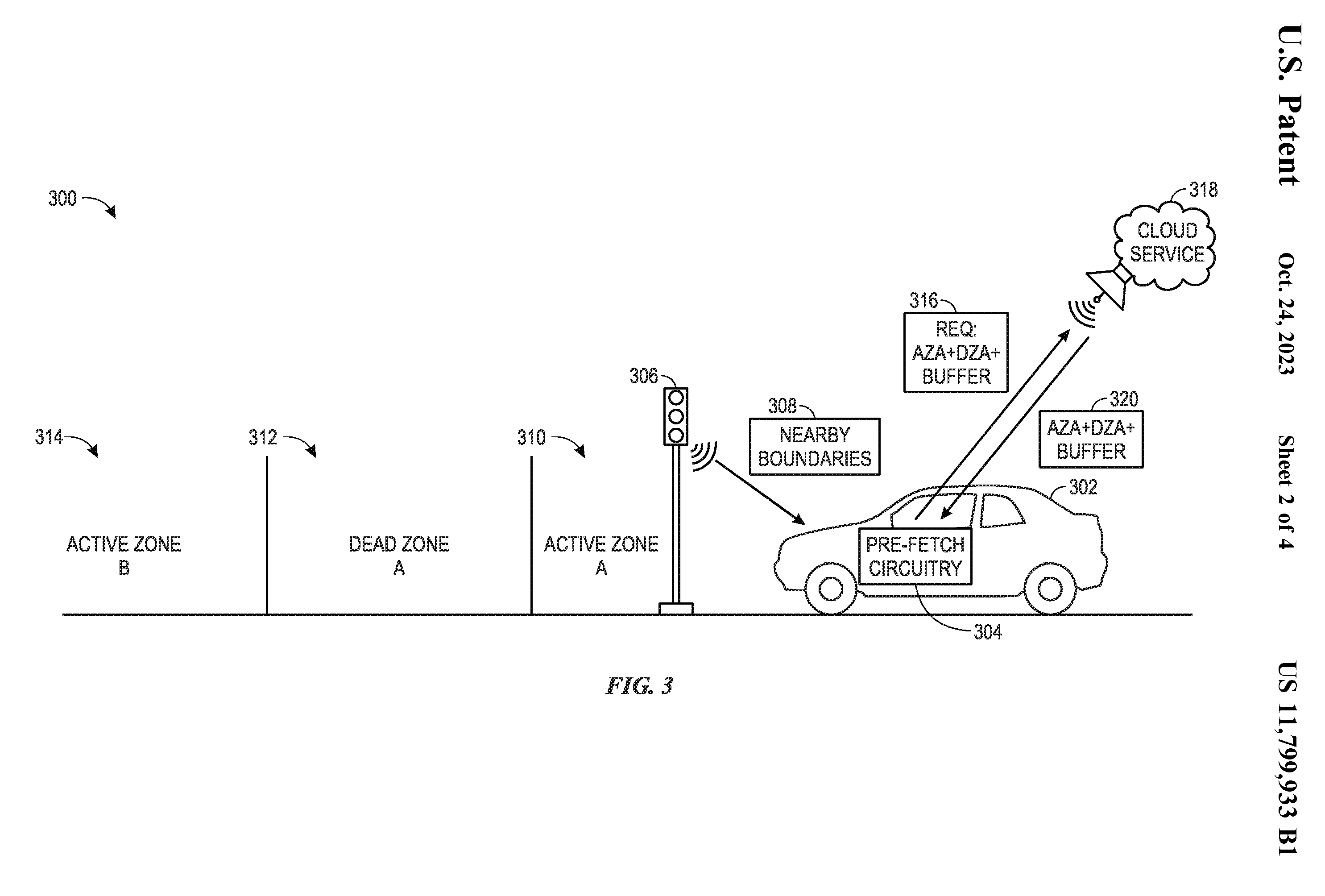
System and methods for pre-fetching data are provided. In one embodiment, an electronic device includes communications circuitry communicatively coupled to a data provider system over a network to obtain streaming data for completion of tasks. The electronic device also includes pre-fetch circuitry that identifies a dead zone in the network; calculates a pre-fetch data size amount based at least in part upon a size of the dead zone; and requests the pre-fetch data size amount of the data, to mitigate lost streaming ability in the dead zone.
Geofencing with satellite systems
 View patent document
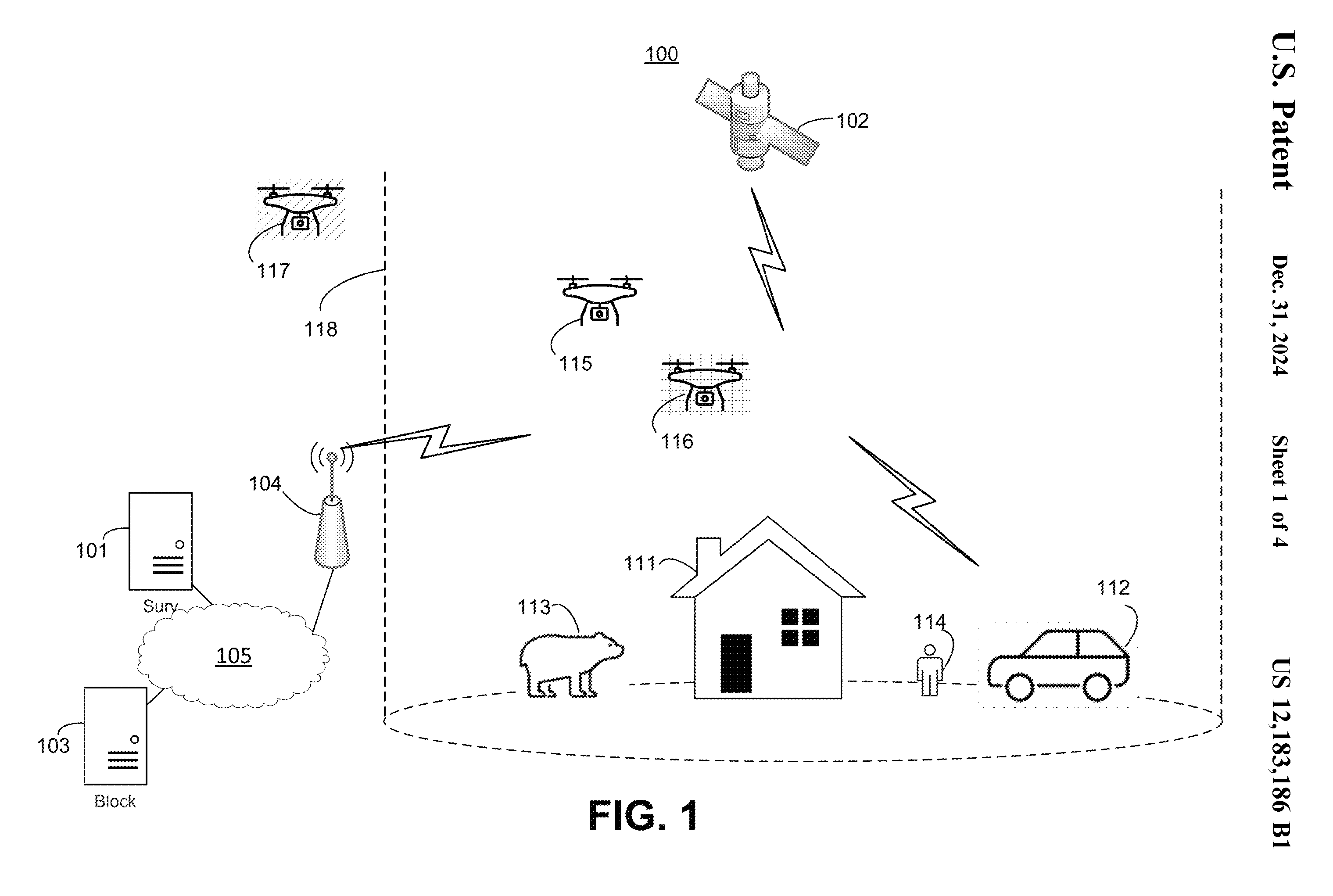
A system may employ one or more satellite sensors to monitor an area; detect a body or thing that should not be present in an area; formulate a response, such as documentation, notifying authorities, or deploying unmanned aerial vehicles; and execute the response. Monitoring an area can be based on a request for surveillance at the area.
Systems and methods for data pre-fetching
 View patent document
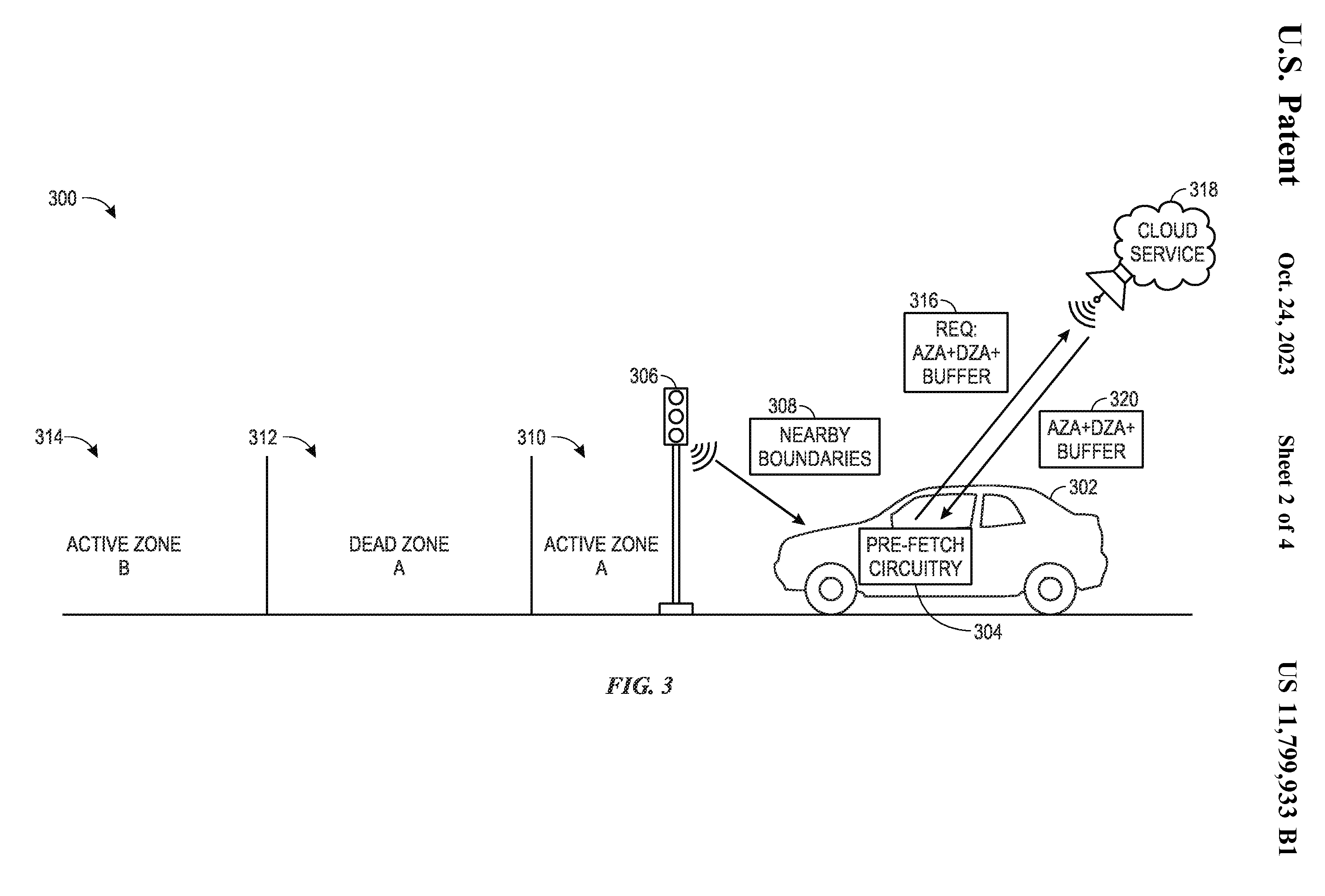
System and methods for pre-fetching data are provided. In one embodiment, an electronic device includes communications circuitry communicatively coupled to a data provider system over a network to obtain streaming data for completion of tasks. The electronic device also includes pre-fetch circuitry that identifies a dead zone in the network; calculates a pre-fetch data size amount based at least in part upon a size of the dead zone; and requests the pre-fetch data size amount of the data, to mitigate lost streaming ability in the dead zone.